
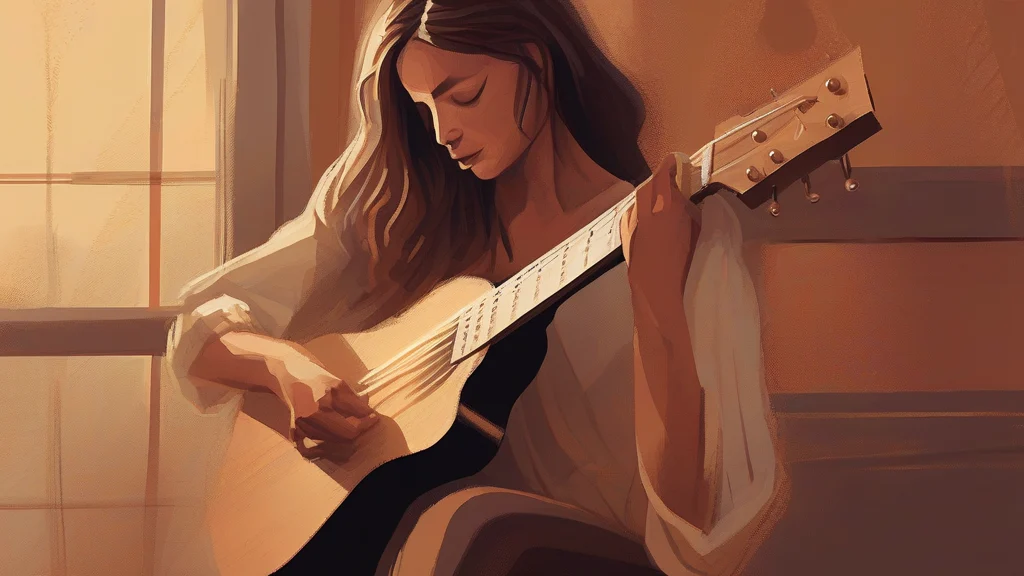
What does strummed mean?
Strummed is the past tense and past participle of strum, a verb meaning to play a stringed instrument by brushing the strings with the fingers rather than plucking them individually. The commonest context is a guitarist strumming chords, a melody, or an accompaniment, although the word can apply to similar instruments more broadly. Its sound suggests a relaxed, rhythmic movement of the hand, but it carries no inherent negative or comic connotation. In writing, strummed can report an observed action, such as “she strummed a chord,” or create an informal, atmospheric impression of casual music-making. Because it describes a manner of playing as well as the act of playing, it is more specific than played and differs from plucked, which usually suggests individual notes. Strummed is useful in fiction, music writing, and conversational descriptions when the movement across the strings, rather than technical fingering, is the point. The form belongs to contemporary standard English in both British and American usage.
verbStrummed is the past tense and past participle of strum: it means that someone played a stringed instrument, especially a guitar, by brushing or sweeping the strings with the fingers.
- Played a stringed instrument, especially a guitar, by brushing or sweeping the strings with the fingers.
"She strummed a few chords while waiting for the train."
"She strummed a few chords while waiting for the train."
"In the recording, the musician strummed the opening figure softly, letting the strings ring."
One word turns a guitarist's hand into the brush that sets strings ringing.
Reviewed by Deb Chak, Editor. AI-assisted content curated by RJS Tech Solutions LLP.
Where does strummed come from?
Strummed is the standard past-tense and past-participle form of strum. The underlying verb is a 19th-century English word, but its exact origin is uncertain, and no secure family of cognates is generally recognized.
Related word forms
How strummed is actually used
Generally neutral in register, though it is especially common in informal descriptions of guitar playing. It may suggest a rhythmic sweeping or brushing motion rather than the careful picking of individual notes.