
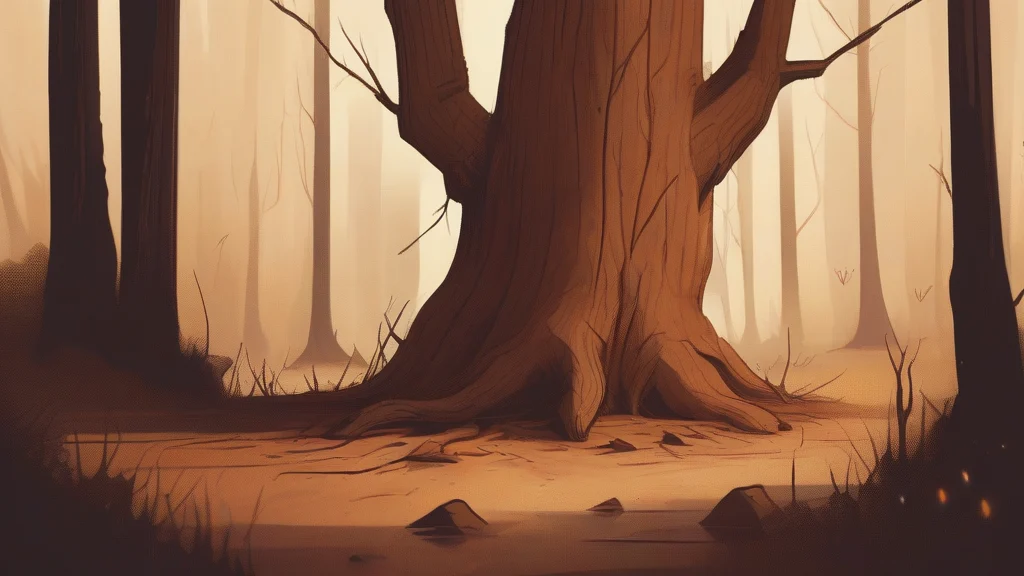
What does stumpiness mean?
Stumpiness names the quality of being short, thick, or abruptly truncated, like the remaining base of a cut tree. It is especially used to describe legs or limbs whose proportions appear compact rather than long and tapering, although it can also characterize roads, infrastructure, or other things that fall notably short of their expected extent. The noun is more analytical than informal: saying that a horse has leg stumpiness presents a feature of its conformation, while saying its legs are stumpy is usually more conversational. Because it derives from the familiar image of a stump, stumpiness communicates abrupt shortness and sometimes thickness or reduced development. It is chiefly a descriptive term found in anatomical, equestrian, geographical, and infrastructure-related writing. In ordinary conversation, stumpy is often more readily understood, but stumpiness is useful when brevity, truncation, or proportion is being treated as a formal characteristic.
nounThe quality of being short, thick, or truncated like a tree stump, especially in reference to limbs or bodily proportions.
- The quality of being short and thick like a tree stump, especially of legs or other limbs.
- The quality of being truncated or insufficiently developed in length.
"The pony's slight leg stumpiness was noticeable when it trotted beside the taller horses."
"An animal's height, bone structure, and leg stumpiness can all affect its suitability for a particular riding discipline."
"The report attributed the regional disparity to the stumpiness of the available broadband infrastructure."
Rare and normally unnecessary; stumpiness is generally treated as an uncountable noun.
"The study compared the relative stumpinesses of several fossil species."
From the unmistakable silhouette of a cut tree trunk, stumpiness became a precise word for proportions that end abruptly rather than taper elegantly.
Reviewed by Deb Chak, Editor. AI-assisted content curated by RJS Tech Solutions LLP.
Where does stumpiness come from?
The word is formed from stumpy, an adjective meaning short and thick like a stump, by adding the standard suffix -ness. The older adjective stumpy developed from stump, whose deeper historical origin is uncertain. The resulting noun stumpiness was subsequently used both for bodily proportions and for systems or structures that are short or insufficiently extended.
Related word forms
How stumpiness is actually used
A descriptive and relatively uncommon noun. It is most natural in formal or technical discussion of anatomy, physical proportions, or infrastructure.
Easily confused with stumpiness
Stumpiness is the noun naming the quality of being short and thick like a stump, whereas stumpy is the adjective describing something with that quality.