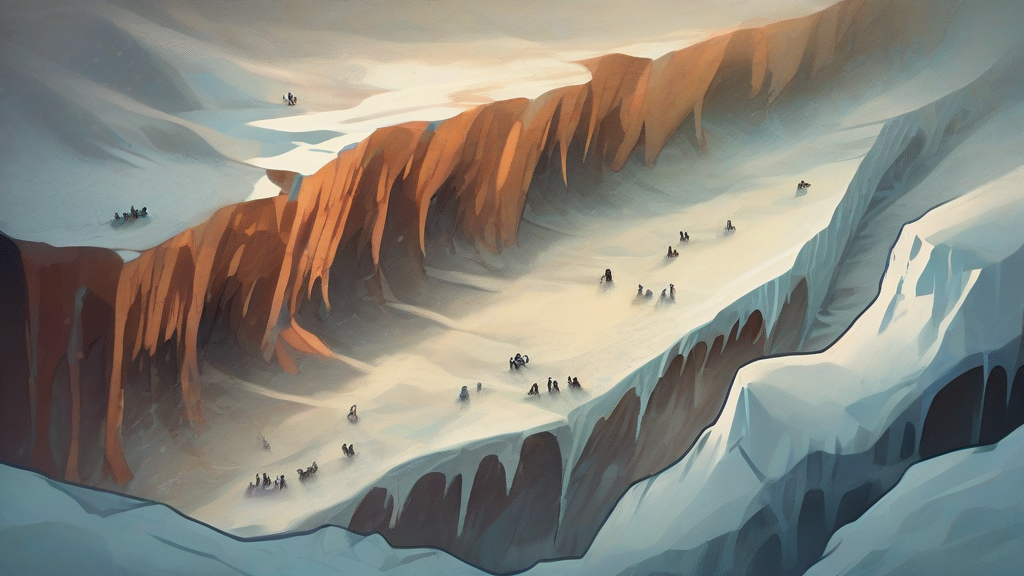
What does subglacial mean?
The term subglacial refers to anything located or occurring beneath a glacier. This can include lakes, rivers, volcanoes, and other geological features that exist under the ice. Subglacial environments are of great interest to scientists studying glaciology and geology because they can provide insights into the dynamics of glacier movement, the formation of glacial features, and the ecosystems that exist in these unique conditions. The study of subglacial environments also has implications for understanding the impacts of climate change on glaciers and ice sheets. Overall, subglacial is a useful term for describing the complex and fascinating world that exists beneath glaciers.
adjectiveLocated or occurring beneath a glacier. Subglacial refers to processes, features, or environments that exist or occur under a glacier.
- Located beneath a glacier
- Relating to or formed beneath a glacier
"The subglacial lake was discovered beneath the ice sheet using radar and seismic measurements."
"The subglacial tunnel was carved out by meltwater flowing beneath the glacier."
"Subglacial volcanoes can create unique landforms when they erupt under the ice."
Reviewed by Deb Chak, Editor. AI-assisted content curated by RJS Tech Solutions LLP.
Etymology of subglacial
The word subglacial is derived from the prefix 'sub-', meaning 'under' or 'beneath', and 'glacial', relating to glaciers. The term has been used in English since the late 19th century to describe geological features and processes occurring beneath glaciers. It is closely related to other terms in glaciology, such as 'supraglacial' and 'englacial', which describe features or processes occurring above or within glaciers, respectively.
How subglacial is actually used
Often used in glaciology, geology, and geography to describe features or processes occurring beneath glaciers.