
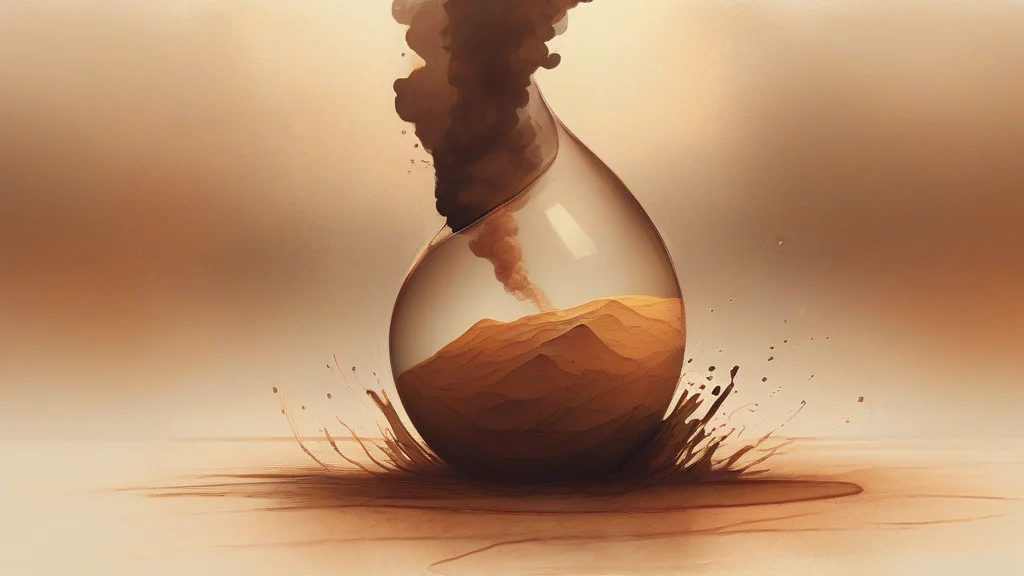
What does sublimating mean?
Sublimating is the present participle of sublimate and describes a transformation in which a solid becomes a gas without first becoming liquid. This process is especially associated with dry ice, which turns directly into carbon dioxide gas at atmospheric pressure. The term also has figurative uses: it can mean refining, purifying, or elevating something, or expressing an idea in a more idealized and restrained form. In scientific writing, “sublimating” identifies a particular phase change and is distinguished from evaporation, which begins with a liquid. Figuratively, the word often suggests moving from something ordinary or concrete toward something more elevated, subtle, or abstract. Its value lies in this combination of technical precision and broader metaphorical force.
To convert a substance directly from a solid into a gas without passing through a liquid state.
"Iodine can sublimate when heated, forming a purple vapor that deposits as crystals on a cool surface."
In chemistry and physics, this is a technical term for a solid-to-gas phase change.
To refine, purify, or elevate something, especially in a figurative or artistic sense.
"The essay sublimates a complicated personal history into a few vivid images."
This use is literary and often implies a transformation into something more abstract, refined, or idealized.
Dry ice never melts: it sublimates, turning straight from frozen carbon dioxide into an invisible cloud of gas.
Reviewed by Deb Chak, Editor. AI-assisted content curated by RJS Tech Solutions LLP.
Where does sublimating come from?
The word comes from Latin sublimare, meaning “to raise” or “lift up,” and ultimately from sublimis, meaning “lofty” or “high.” In early chemistry, sublimation referred to the heating of a substance so that it vaporized and then deposited again as a solid. The modern scientific sense developed from this practice, while the figurative senses continued the older idea of raising something to a higher or more refined level.
Related word forms
How sublimating is actually used
In scientific contexts, the term is precise: sublimating describes a solid-to-gas phase change without an intermediate liquid. In figurative use, it often suggests refinement or elevation, sometimes with the implication of removing ordinary or material features.
Easily confused with sublimating
Evaporating generally describes a liquid changing into a gas at or below its boiling point, whereas sublimating specifically describes a solid changing directly into a gas without becoming liquid.
Sublimating involves a physical or figurative transformation, while subliminal describes something that is perceived below the threshold of conscious awareness.