
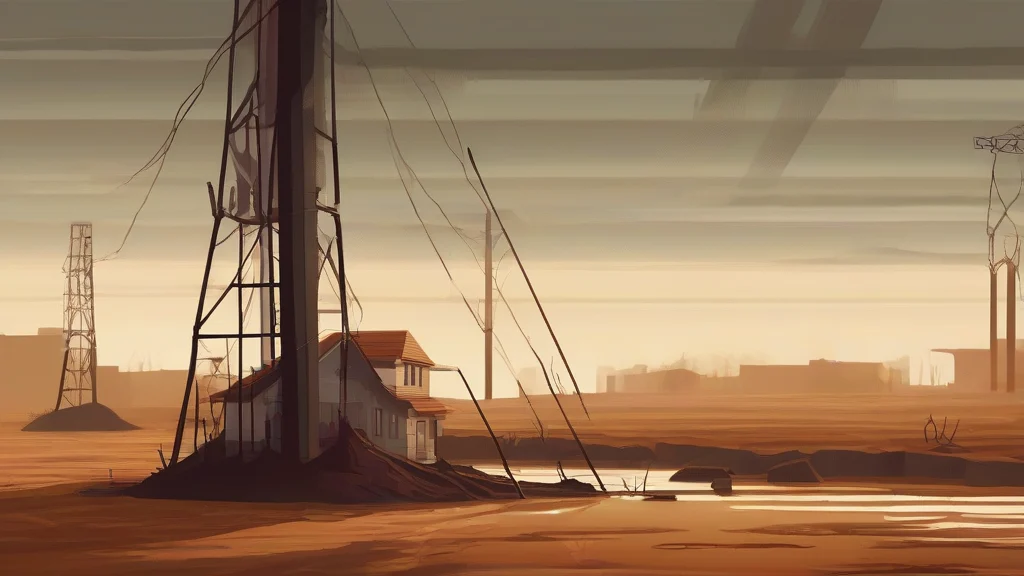
What does subsidence mean?
Subsidence is the sinking or settling downward of land, buildings, or another mass. It is most often used in technical contexts where the ground moves because support beneath it has weakened or material below it has been removed. Mining and the withdrawal of groundwater can both contribute to land subsidence, which may cause roads to crack, foundations to shift, and buildings to settle unevenly. The word can also describe a gradual decline in something intangible, such as public interest, political influence, or economic activity, though this use is less frequent. Subsidence is distinct from a sudden collapse: it often describes a movement that develops over time, whether beneath the ground or within a broader trend. The word is valuable because it identifies both physical settlement and gradual diminishment, but in engineering literature it normally refers specifically to the downward movement of the ground.
nounThe sinking or settling downward of land or another mass, especially when underground material is removed or the ground becomes unstable. More broadly, it means a gradual decline or decrease in prominence, activity, or amount.
- The sinking or settling downward of land or another mass.
- A gradual decline or decrease in prominence, activity, pressure, or amount.
"Engineers monitored the subsidence of the ground beneath the expanding mining operation."
"Heavy groundwater extraction contributed to widespread land subsidence across parts of the region."
"The report described a gradual subsidence in public interest after the controversy began."
The word is normally uncountable when referring to the general process of sinking. The plural is used for distinct occurrences or episodes of subsidence.
"Several separate subsidences were identified near the abandoned mine."
When the ground beneath a city quietly sinks, streets can crack, buildings can tilt, and a seemingly solid landscape can reveal its hidden movement.
Reviewed by Deb Chak, Editor. AI-assisted content curated by RJS Tech Solutions LLP.
Where does subsidence come from?
Subsidence comes from Latin subsidentia, meaning “a sinking,” formed from subsidere, “to sink or settle beneath.” The English word appeared in the early modern period and developed its familiar sense of sinking ground alongside broader figurative meanings. Related English words include subside, while subsidy, subsidiary, and subsidize derive through the closely related Latin noun subsidium.
How subsidence is actually used
The physical sense is chiefly technical, especially in geology, surveying, mining, and civil engineering. The figurative sense is less common and generally formal.
Easily confused with subsidence
Subsidence means sinking or declining, whereas subsequent means occurring or coming after something else.
Subsidence is a process of sinking or decline, while a subsidy is financial assistance or support.