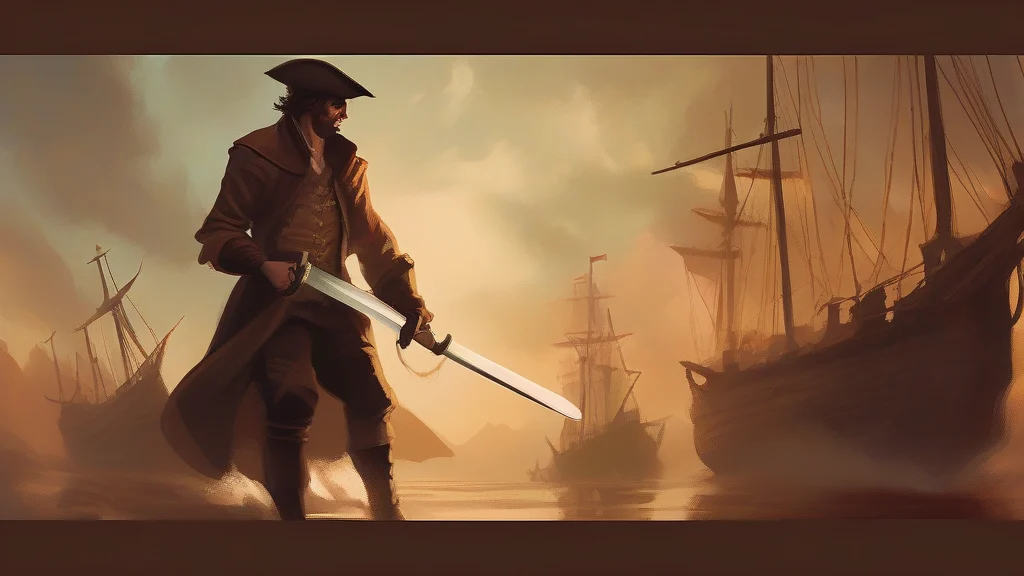
What does swashbuckling mean?
The term 'swashbuckling' refers to a style of bold and adventurous behavior, often associated with sword fighting or other forms of derring-do. This term is commonly used to describe characters in fiction, such as novels or films, who embody this type of behavior. In a broader sense, 'swashbuckling' can also refer to a sense of excitement and danger, often associated with exploration or discovery. The term is thought to have originated from the 17th-century English word 'swash,' meaning a flowing or sweeping motion, and 'buck,' meaning a sudden or violent movement. The term has been used in English since the 17th century and has become a popular descriptor of adventurous and bold behavior. In modern usage, 'swashbuckling' is often used to describe characters in fiction who are known for their bravery and skill with a sword, such as the character of Errol Flynn in the 1930s and 1940s films.
adjectiveCharacterized by or given to bold and adventurous behavior, typically involving sword fighting or other forms of derring-do.
- 1. Characterized by or given to bold and adventurous behavior, typically involving sword fighting or other forms of derring-do.
"The swashbuckling hero of the novel was known for his bravery and skill with a sword."
"The swashbuckling hero of the novel was known for his bravery and skill with a sword."
"The pirate's swashbuckling lifestyle was marked by his love of adventure and his skill with a sword."
Reviewed by Deb Chak, Editor. AI-assisted content curated by RJS Tech Solutions LLP.
Etymology of swashbuckling
The term 'swashbuckling' is thought to have originated from the 17th-century English word 'swash,' meaning a flowing or sweeping motion, and 'buck,' meaning a sudden or violent movement. The term has been used in English since the 17th century and has become a popular descriptor of adventurous and bold behavior.
How swashbuckling is actually used
The term 'swashbuckling' is often used to describe characters in fiction who are known for their bravery and skill with a sword. It can also be used to describe a sense of excitement and danger, often associated with exploration or discovery.