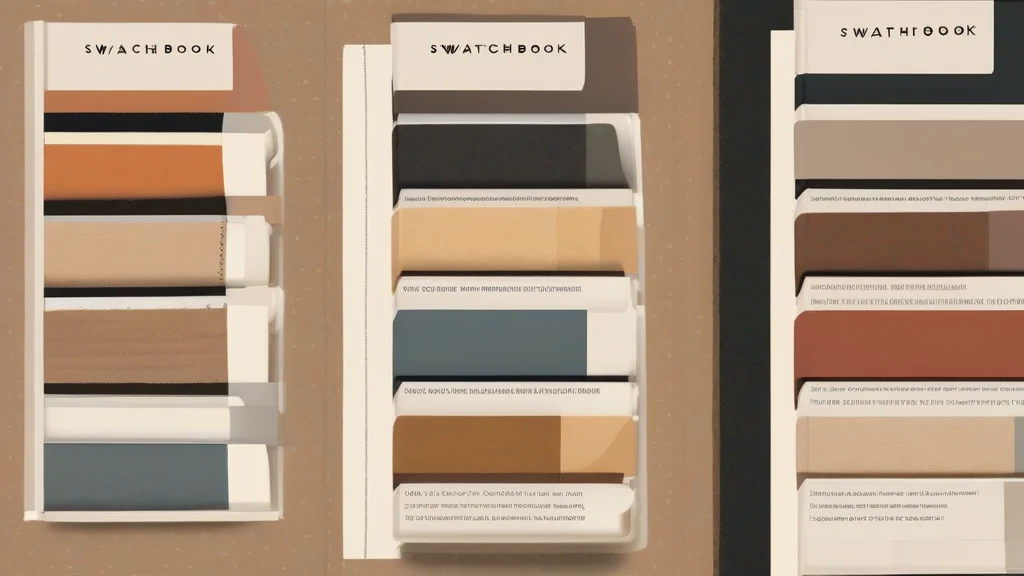
What does swatchbook mean?
A swatchbook is a valuable tool used by designers, artists, and manufacturers to organize and compare different materials. It typically consists of a book or collection of fabric swatches, showcasing various colors, textures, and patterns. Swatchbooks are essential for selecting materials, creating designs, and communicating with clients or colleagues. They can be used for a wide range of applications, from fashion and interior design to architecture and product development. By providing a tangible and visual representation of materials, swatchbooks facilitate the design process and help ensure that the final product meets the desired aesthetic and functional requirements.
nounA swatchbook is a book or collection of fabric swatches, often used by designers, artists, and manufacturers to display and compare different colors, textures, and patterns of materials.
- A collection of fabric swatches
- A book used for displaying and comparing materials
"The interior designer flipped through her swatchbook, searching for the perfect shade of blue to match the client's new sofa."
"The fashion designer created a swatchbook of all the fabrics she wanted to use in her new collection."
"The architect used a swatchbook to select the perfect materials for the building's interior."
The plural form is used when referring to multiple books or collections of fabric swatches.
"The design studio had several swatchbooks on hand for clients to browse."
Reviewed by Deb Chak, Editor. AI-assisted content curated by RJS Tech Solutions LLP.
Etymology of swatchbook
The term 'swatchbook' is derived from the words 'swatch,' meaning a small sample of fabric, and 'book.' The concept of a swatchbook has been around for centuries, with designers and manufacturers using collections of fabric samples to showcase their materials. The modern swatchbook has evolved to include a wide range of materials and is used across various industries.
How swatchbook is actually used
This term is commonly used in the design, fashion, and manufacturing industries.