
What does switchback mean?
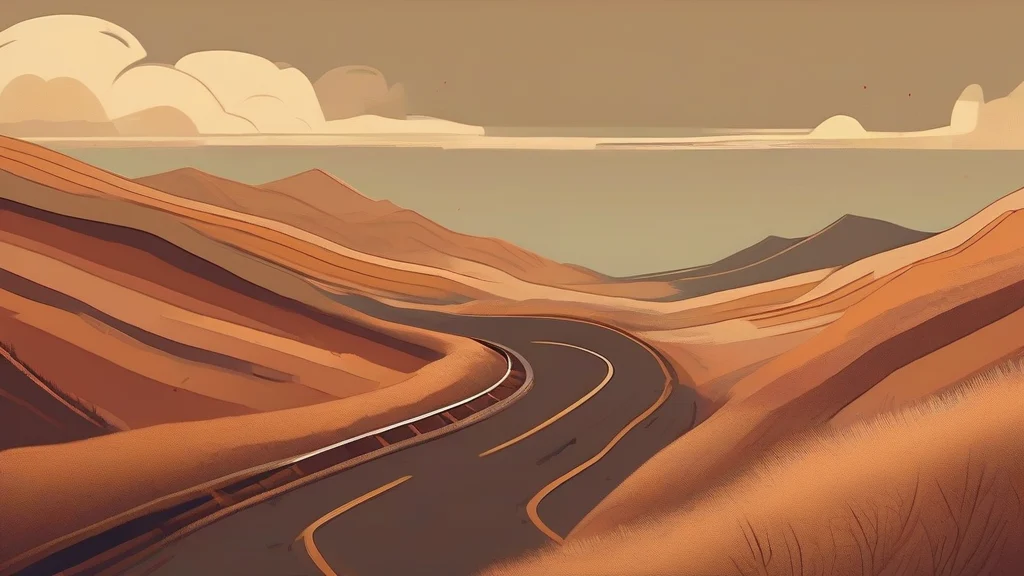
A switchback is a sharp bend or reversal in direction. The word is especially associated with steep roads, mountain paths, trails, and ski routes, where repeated turns allow a gradual ascent without requiring the traveller to follow one extremely steep slope. It can also refer more generally to an abrupt change in direction or a reversal in a plan, discussion, or journey. As a verb, to switchback means to turn sharply, often more than once, or figuratively to reverse course unexpectedly. The term is useful because it captures both the physical shape of a winding route and the broader idea of a sudden backtracking or change of direction. It is common in British and American English, though figurative uses may sound somewhat literary in formal writing.
A sharp bend or reversal in direction, especially one in a road, path, trail, or route.
"The switchback gave drivers a safer way up the steep hillside."
Often used for a bend or series of bends on a route that climbs or descends steep ground. It can also describe an unexpected reversal in a course of action.
To change direction abruptly, especially by turning sharply back on one's route.
"The road switchbacks repeatedly before reaching the pass."
Usually describes a route or traveller making one or more sharp reversals in direction. Figurative use is possible but less common.
The plural is used for individual bends in a route and for routes featuring repeated sharp changes in direction.
"The pass is marked by a series of switchbacks."
Mountain roads used switchbacks to turn a punishing climb into a series of manageable zigzags—and the same idea appears in hairpin roads around the world.
Reviewed by Deb Chak, Editor. AI-assisted content curated by RJS Tech Solutions LLP.
Where does switchback come from?
The word combines the older noun switch, meaning a turning or change, with back, indicating reversal or movement in the opposite direction. It developed in connection with roads and paths that double back sharply, especially on steep terrain. The compound reflects a long-established English pattern of joining directional terms to describe a change of course.
Related word forms
How switchback is actually used
The noun is common in descriptions of roads, trails, skiing routes, and other routes that change direction sharply. As a verb, it is somewhat literary or descriptive and usually suggests an abrupt, often repeated change of direction. The expression can also describe a sudden reversal in a plan, discussion, or course of action.
Easily confused with switchback
A switch is a device or mechanism for changing or interrupting a circuit or process, whereas a switchback is a bend or sudden reversal in direction.
A turnaround can be a complete change in direction, policy, or situation, while a switchback specifically refers to a sharp physical change in direction.