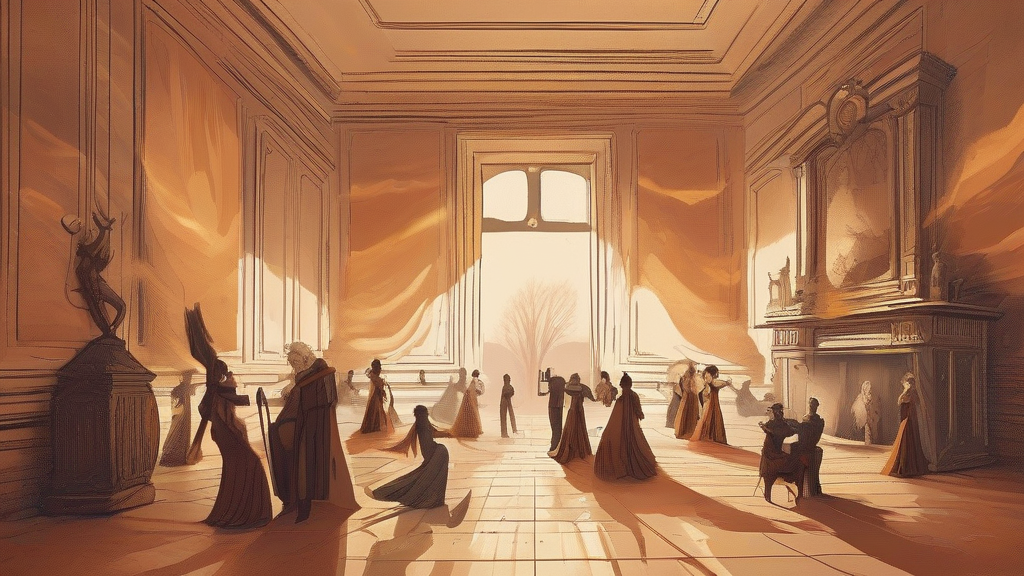
What does tableaux mean?
A tableau is a vivid or striking picture, scene, or representation that captures a moment in time. It can refer to a work of art, a scene from a play or film, or even a group of people arranged to form a picture. Tableaux often convey a sense of stillness or quiet contemplation, inviting the viewer to reflect on the scene or image. The term can be used in various contexts, including art, theater, and literature. Tableaux can be used to evoke emotions, convey meaning, or simply to create a sense of beauty. The word's versatility and evocative power make it a useful and interesting term in the English language.
nounA tableau is a vivid or striking picture, scene, or representation, especially one that is frozen or unchanging. It can also refer to a group of people arranged to form a picture or scene.
- A vivid or striking picture, scene, or representation.
- A group of people arranged to form a picture or scene.
"The artist's use of color and composition created a stunning tableau that captivated the audience."
"The museum exhibit featured a series of tableaux depicting historical events."
"The theater company's use of tableaux vivant added a unique element to their production."
Reviewed by Deb Chak, Editor. AI-assisted content curated by RJS Tech Solutions LLP.
Etymology of tableaux
The word 'tableaux' originates from the French language, where it is the plural form of 'tableau', meaning 'picture' or 'scene'. The French term is derived from the Old French 'tablel', which referred to a small board or tablet. The Latin root 'tabula' also influenced the development of the word, which has evolved to encompass various meanings related to visual representation and frozen scenes.
How tableaux is actually used
Tableaux can be used to describe both visual art and frozen scenes or moments in time. It often carries a sense of stillness or quiet contemplation.