
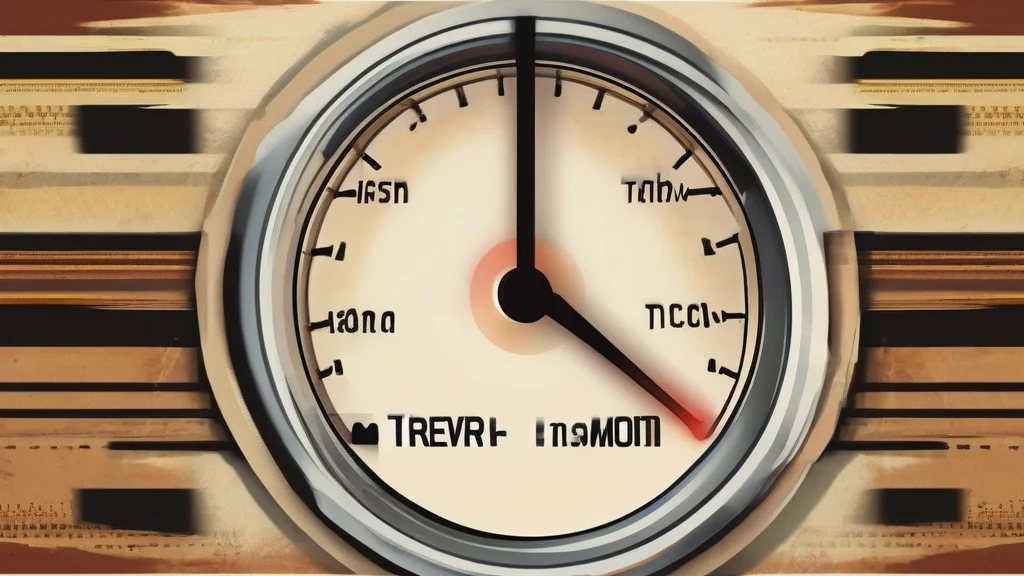
What does tachometer mean?
A tachometer is an instrument that measures how rapidly something rotates, most commonly an engine or a drive shaft. It displays rotational speed, usually in revolutions per minute, or rpm, allowing a driver or operator to judge whether a machine is running smoothly, working efficiently, or operating at dangerously high speed. In a car, the tachometer is especially useful when changing gears, selecting engine speed, or monitoring performance. Although the word can be used broadly for devices that measure speed, its usual modern meaning is an engine gauge with a needle or digital display. It should not be confused with a speedometer, which indicates a vehicle's road speed in miles or kilometres per hour. The word combines Greek roots meaning “speed” and “measurement,” reflecting the instrument's long-established mechanical purpose.
nounAn instrument that measures and displays the rotational speed of a rotating shaft or engine, usually in revolutions per minute (rpm). It may also be used more broadly to measure speed, such as in a vehicle.
- An instrument that indicates the rotational speed of a shaft, engine, or other rotating mechanism, typically in revolutions per minute.
- An instrument that measures the speed of movement or rotation in other mechanical or scientific contexts.
"The driver glanced at the tachometer to check the engine's revolutions per minute."
"The tachometer showed that the engine was idling smoothly."
"A motorcycle tachometer helps the rider judge when to change gear."
The plural is used when referring to multiple tachometers or instruments of the same type.
"The mechanics checked the tachometers before the race."
A tachometer turns the invisible rhythm of an engine into a readable number: the faster the needle climbs, the harder the engine is working.
Reviewed by Deb Chak, Editor. AI-assisted content curated by RJS Tech Solutions LLP.
Where does tachometer come from?
Tachometer was formed in the 19th century from Greek takhos, meaning “speed,” and metron, meaning “measure,” together with the connecting element -ometer. The underlying Greek roots also appear in modern terms associated with rapid movement or speed, including tachyon. The compound follows the common English pattern of scientific and technical instrument names ending in -ometer.
Related word forms
How tachometer is actually used
In general automotive use, a tachometer usually reports engine revolutions per minute. The informal abbreviation “tach” is common among motorists and motorcyclists. “Speedometer” is sometimes used loosely for a tachometer, but technically it measures vehicle speed rather than rotational speed.
Easily confused with tachometer
A tachometer measures rotational speed, especially engine revolutions per minute, whereas a speedometer measures a vehicle's linear speed in miles or kilometres per hour.
A tachometer shows current rotational speed, while an odometer records the total distance a vehicle has travelled.