
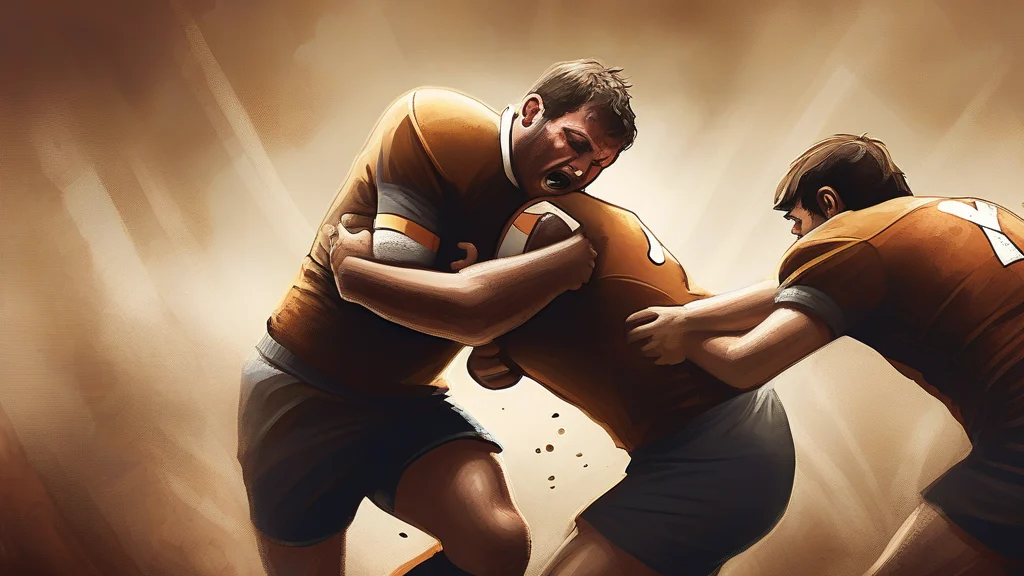
What does tackling mean?
Tackling is the present participle and verbal noun of tackle, and in contemporary English its dominant sense is figurative: taking active, determined steps to deal with a problem, challenge, or unpleasant situation. The expression often implies that the difficulty is significant and that a direct approach is required, so tackling poverty sounds more purposeful and forceful than merely discussing poverty. In sport, particularly football and rugby, tackling also means stopping or bringing down an opponent by seizing and forcing them to the ground. The related noun refers to the activity or process of confronting a problem; as a gerund, it is normally uncountable and is especially common before articles, as in tackling a difficult question. Tackling comes from the older English verb tackle, historically associated with grappling with an opponent and with ropes or equipment used to secure loads. Its modern usefulness lies in expressing energetic engagement with difficulties rather than passive awareness of them.
To deal actively and purposefully with a problem, challenge, or difficult task; also, in a physical context, to grapple with or bring down an opponent.
"The mayor pledged to tackle unemployment in the district."
The present participle is especially common in figurative, action-oriented contexts.
The action or process of confronting a problem or opponent; in sport, the act of seizing and bringing down an opponent.
"Effective tackling of the issue will require cooperation between local authorities."
Usually uncountable and functioning as a gerund or verbal noun.
The noun normally takes no plural form and is used as a mass noun or gerund.
"The tackling of climate change requires sustained international cooperation."
From grabbing an opponent to taking on a problem, tackling has always been about getting a firm hold on something difficult.
Reviewed by Deb Chak, Editor. AI-assisted content curated by RJS Tech Solutions LLP.
Where does tackling come from?
Tackling was formed from tackle, whose English history reaches back to Middle English, when it referred to ropes or ship’s rigging and to equipment used for fastening and handling loads. The verb sense “grapple with an opponent” developed from the idea of taking hold, and later broadened to “deal effectively with a problem.” The modern gerund and verbal noun have followed that verb, while the word’s deeper Germanic ancestry is often linked to Old English tæcel and cognate forms.
Related word forms
How tackling is actually used
The figurative sense is dominant in modern English and often implies that the difficulty is substantial and requires direct action. In sport, tackling is standard terminology, especially in football, rugby, and wrestling. The noun is normally uncountable and behaves like a gerund.
Easily confused with tackling
Tackling means confronting a difficulty, whereas tangling means twisting or entangling something so that it becomes knotted or difficult to separate.