
What does taiko mean?
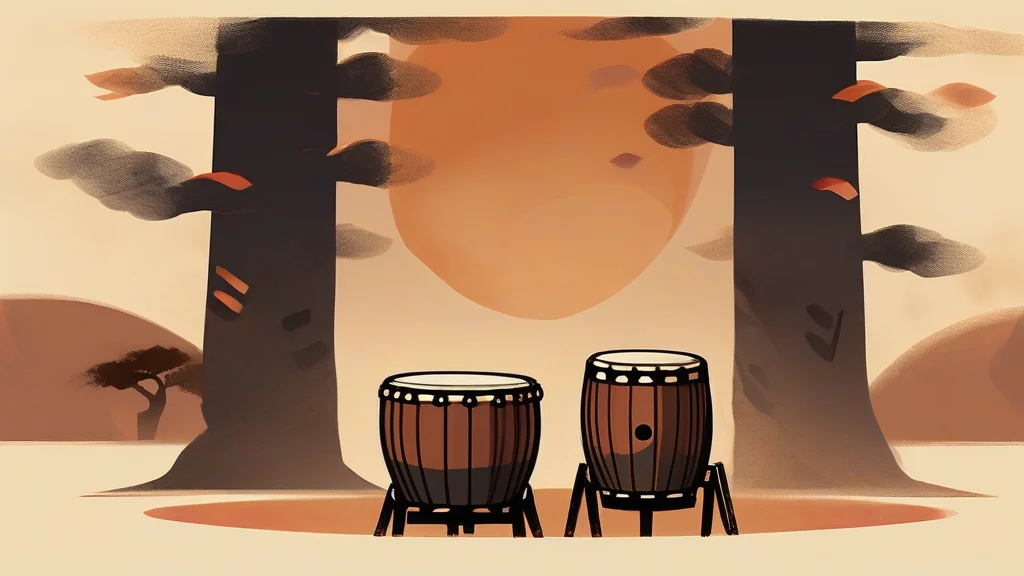
Taiko refers to traditional Japanese drums and, by extension, to the ensembles and performances in which they are played. The instruments vary in size and construction, but many are barrel-shaped and struck with wooden sticks. They are commonly played in groups, producing powerful, precisely coordinated rhythms that combine percussion with vigorous physical movement. In English, the word can name either an individual drum or the activity or ensemble more broadly, as in a taiko performance or taiko ensemble. Taiko is also associated with festivals, cultural celebrations, and staged concerts. Its sound is often described as deep, resonant, and dramatic, although performances may include quieter passages and contrasting rhythmic patterns. The term is best understood as a reference to a distinct Japanese drumming tradition rather than as a general synonym for every percussion instrument.
nounA traditional Japanese drum, especially one played with sticks in an ensemble or performance. The term can also refer collectively to a taiko drumming group or performance.
- A traditional Japanese drum, especially one played with sticks as part of an ensemble.
- A taiko drumming ensemble, performance, or the act of playing such drums.
"The musicians filled the festival square with thunderous taiko rhythms."
"She learned to play taiko with her community ensemble."
"A colorful taiko performance opened the cultural festival."
Used when referring to individual drums or separate taiko groups.
"The school has several taikos available for its cultural festival."
Taiko turns the human body into an instrument: the drum’s deep, resonant beat is often created through movement as much as through the hands.
Reviewed by Deb Chak, Editor. AI-assisted content curated by RJS Tech Solutions LLP.
Where does taiko come from?
Taiko is borrowed from Japanese 太鼓 (taiko), formed from 太, meaning “large” or “great,” and 鼓, meaning “drum.” The compound is commonly understood as “large drum,” reflecting the prominent role of big drums in traditional Japanese performance. English speakers adopted the word for Japanese drums and drumming groups.
How taiko is actually used
In English, taiko is used for both the individual drums and, collectively, for an ensemble or performance. It is most closely associated with Japanese musical traditions, although similar barrel-shaped drums are played elsewhere in East Asia.