
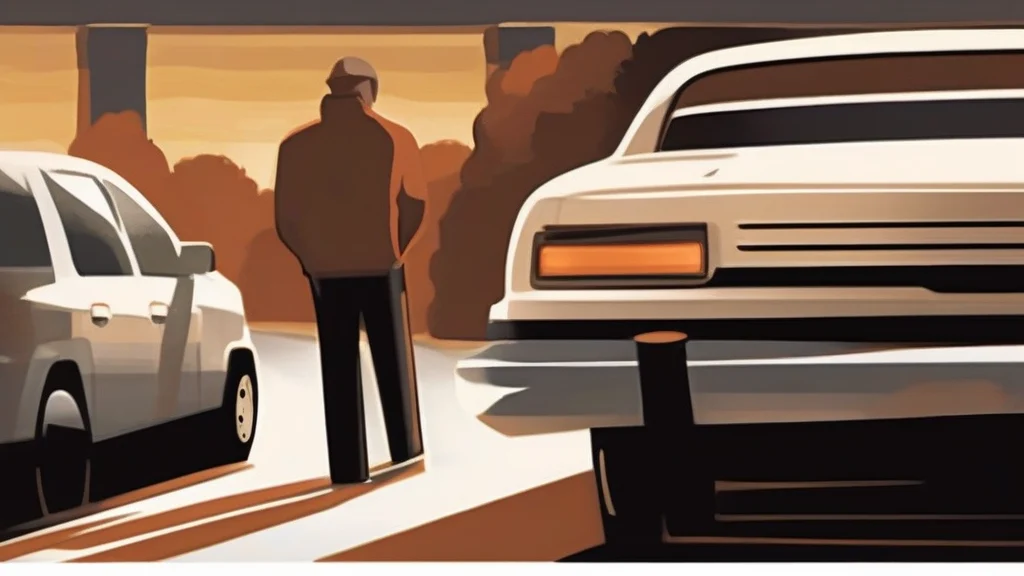
What does tailgating mean?
Tailgating has two well-established meanings. Its traffic sense refers to following another vehicle at an unsafe distance, especially at a speed that makes a rear-end collision likely if the vehicle ahead brakes suddenly. The practice is commonly treated as dangerous and may lead to fines, licence penalties, or increased insurance costs. The word can also name a social gathering held around the open tailgate of a car, pickup, or other vehicle, normally before or during a sporting event. Participants often eat, drink, play music, and wear their team's colours in the car park before entering the venue. These senses share the image of a vehicle's rear or tailgate, although the traffic meaning is more associated with unsafe driving while the social meaning suggests informal fellowship and anticipation. The term is particularly common in North American English, with the sporting sense especially associated with football, although it can be used for other events.
The unsafe practice of following another vehicle too closely, or an informal gathering held around the open tailgate of a vehicle before or during a sporting event.
"The highway patrol cited the driver for tailgating."
The traffic sense is chiefly North American and clearly connotes unsafe driving.
To follow another vehicle at an unsafe distance, or to participate in a gathering held around an open vehicle tailgate.
"They tailgated the lorry all the way home."
The sporting-event sense is informal and especially common in North American English.
Plural forms are uncommon; one would more often refer to separate incidents of unsafe following or to multiple sporting-event gatherings.
"The police reported several tailgatings during the evening."
A tailgate began as a vehicle's rear door, then became a party, and later acquired a much less festive meaning: driving dangerously close to the car ahead.
Reviewed by Deb Chak, Editor. AI-assisted content curated by RJS Tech Solutions LLP.
Where does tailgating come from?
The compound tailgate was formed from tail and gate, originally denoting the hinged rear door of a vehicle. The sporting-event use developed from gatherings centred on vehicles with their rear gates open, and the word came to denote the gathering itself. The traffic sense developed by extension: following too closely behind a vehicle resembles a trailer or another vehicle pressing close to its tailgate. Its earliest precise date of use is uncertain, but both senses were established during the 20th century.
Related word forms
How tailgating is actually used
The traffic sense is chiefly North American and is strongly negative, implying unsafe driving. The sporting-event sense is informal but established, particularly in American English.