What does tamandua mean?
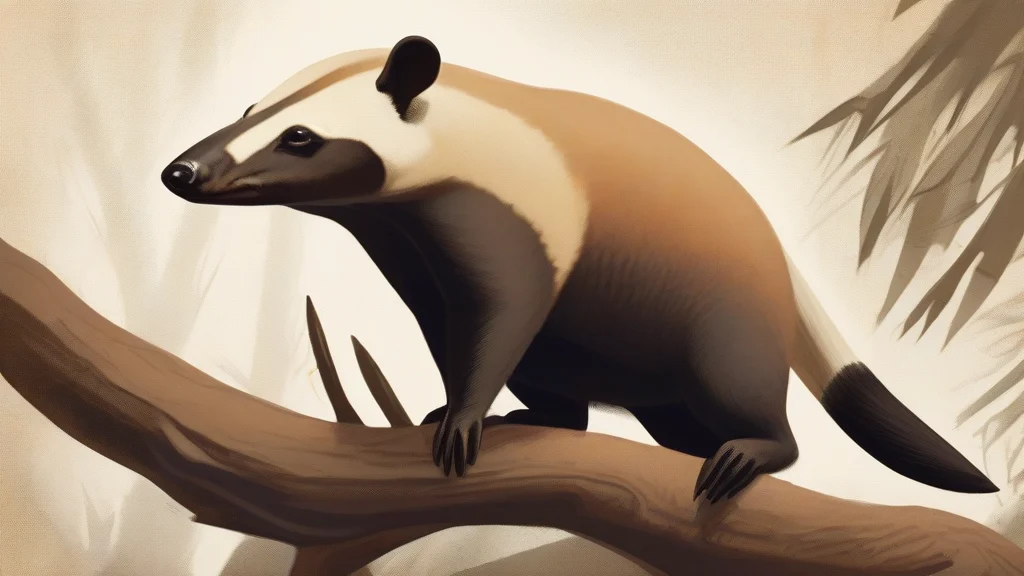
The tamandua is a unique and fascinating creature, native to Central and South America. It is a type of anteater, characterized by its long, sticky tongue and distinctive appearance. In the wild, tamanduas are solitary animals and have a large home range. They are often studied in scientific and academic contexts, and are a popular subject in wildlife documentaries. The term 'tamandua' is formal or technical, and is not commonly used in everyday conversation. Despite its relatively unknown status, the tamandua is an interesting and important species, and continues to be the subject of scientific study and research. Its unique characteristics and behavior make it a valuable subject for study, and its conservation is an important issue in many parts of its range.
nounA tamandua is a species of mammal in the order Pilosa, native to Central and South America. It is a type of anteater.
- A species of mammal in the order Pilosa, native to Central and South America
"The tamandua's unique appearance and behavior have made it a popular subject in wildlife documentaries."
"The tamandua's long, sticky tongue is used to catch ants and termites."
"In the wild, tamanduas are solitary animals and have a large home range."
The plural form 'tamanduas' is used when referring to multiple tamanduas.
"A group of tamanduas was spotted in the wild."
Reviewed by Deb Chak, Editor. AI-assisted content curated by RJS Tech Solutions LLP.
Etymology of tamandua
The term 'tamandua' is derived from the Tupi language, in which 'tamandua' means 'anteater'. This word is thought to have been borrowed into Spanish and Portuguese, and eventually into English. The term has been used in scientific and academic contexts since the 18th century, and has become a widely accepted term in the field of zoology.
How tamandua is actually used
Tamandua is a formal or technical term, often used in scientific or academic contexts. It is not commonly used in everyday conversation.