
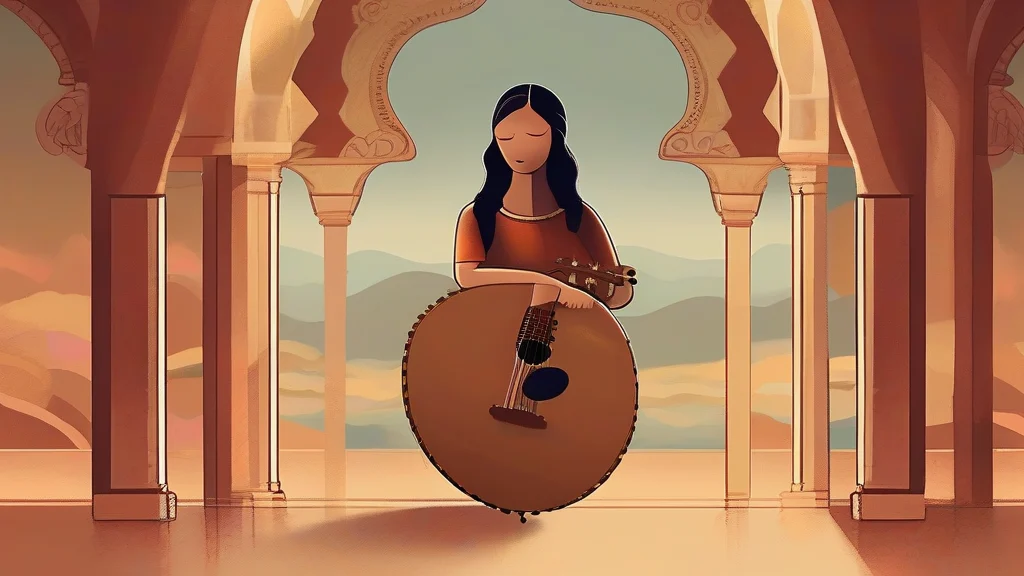
What does tambura mean?
A tambura is a long-necked, fretted stringed instrument associated with the music of the Indian subcontinent. It is traditionally used to maintain a steady tonal or rhythmic foundation, often by sounding open strings that produce a continuous drone. In Indian classical and devotional performance, the tambura may accompany singers as well as melody instruments such as the sitar or violin. Although the instrument is sometimes described as a type of lute, that label can obscure the distinctive qualities of its long neck, resonator, sympathetic strings, and supporting role. English speakers may encounter both tambura and tanpura, with tanpura especially common in contemporary descriptions of Indian classical music. The instrument belongs to a wider family of long-necked plucked chordophones found across Asia, and its sustained sound makes it both a practical accompaniment and a defining part of the musical atmosphere in which it is played.
nounA long-necked, fretted stringed instrument of Indian origin, traditionally used to provide a sustained drone accompaniment in classical and devotional music.
- A long-necked, fretted lute of Indian origin, used to produce a continuous drone and to accompany vocal and instrumental music.
"The musicians opened the performance with a slow melody on the tambura."
"A soft drone from the tambura filled the room as the singer began."
"She studied the tambura before joining the classical ensemble."
The regular plural is tamburas, although the instrument is also frequently mentioned collectively without a marked plural.
"Two tamburas were tuned before the rehearsal began."
With strings that can make the instrument's wooden body resonate like a choir, the tambura turns one plucked note into a sustained foundation of sound.
Reviewed by Deb Chak, Editor. AI-assisted content curated by RJS Tech Solutions LLP.
Where does tambura come from?
The word comes through forms in Indian languages from Sanskrit tamburā, an older name for a stringed instrument. It was also transmitted through Persian and Arabic as tanbur, a term used for related long-necked lutes. The English spelling tambura reflects this Indo-Persian transmission, while tanpura became especially prominent in the language of Indian classical music.
Related word forms
How tambura is actually used
The name is also commonly spelled tanpura. In discussions of Indian classical music, the instrument's role as a drone provider is often emphasized. The form tamboura is also encountered, but tambura and tanpura are the most familiar English spellings.
Easily confused with tambura
Tanpura is a common alternative name and spelling for the same Indian drone instrument, especially in contemporary classical music.