
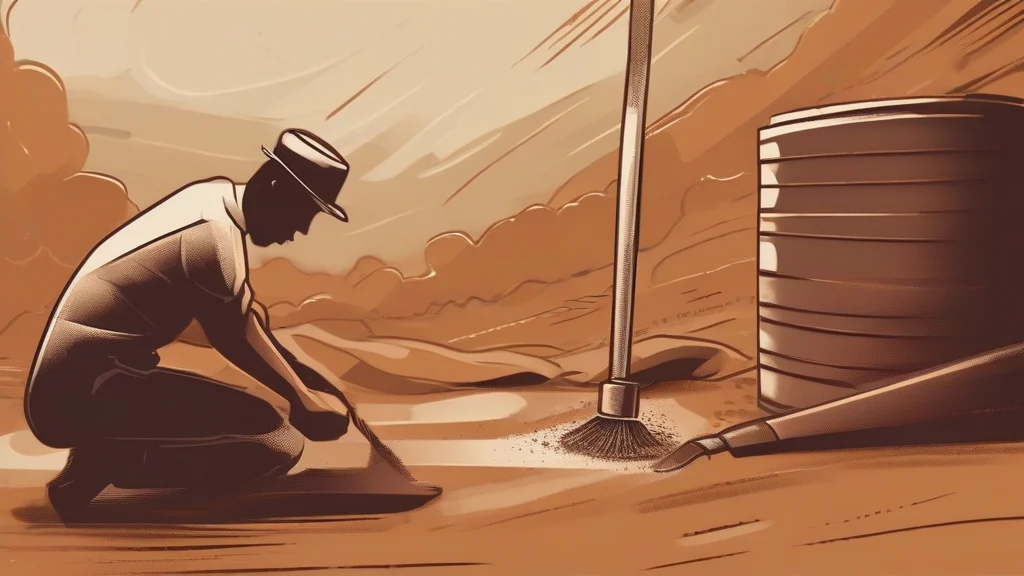
What does tamping mean?
Tamping means packing, compressing, or securing material by repeated blows or firm pressure. It is commonly used when describing the compaction of soil, gravel, sand, or freshly poured concrete, often with a tamper, rammer, or similar tool. The action is distinct from simply spreading material because its purpose is to make the material denser, more stable, or better able to support something. In railway maintenance, tamping has a specialized meaning: ballast is packed around sleepers and beneath the track to maintain its alignment and stability. Tamping can also be used figuratively for forcefully containing or suppressing something, though this usage is less frequent. The related noun refers either to the act of tamping or to material used for that purpose. Tamping is most often encountered in construction, engineering, horticulture, and railway work, where precision and the condition of the packed material matter.
To pack or compact a material by repeatedly striking or pressing it, or to fill a hole or opening with firmly packed material.
"He tamped the gravel around the post until it stood upright."
In railway maintenance, the term specifically refers to packing ballast around sleepers.
The act of tamping or the material used to fill and compact a space; in railway work, the ballast packed around the track.
"After the tamping was completed, the track was ready for the next train."
This noun use is common in technical contexts and is usually treated as uncountable, although a rare plural exists.
Rare; the noun is normally uncountable.
"The workers checked each tamping of the soil to make sure the posts were secure."
Before modern track-maintenance machinery, railway crews packed ballast around sleepers by hammering it with heavy iron bars.
Reviewed by Deb Chak, Editor. AI-assisted content curated by RJS Tech Solutions LLP.
Where does tamping come from?
The English verb appeared in the 16th century, borrowed from French tamponner or its related form tamper, meaning to fill or plug. The ultimate origin of the French word is uncertain, though proposals relating it to Germanic forms meaning to stamp or tamp have been made. English retained the related noun tamper, while tampon was borrowed through French from the same broad tradition.
Related word forms
How tamping is actually used
The word is neutral and technical rather than literary in most contexts. In railway terminology, it has the established specialized meaning of packing ballast around track; figurative uses such as “tamping down opposition” convey forceful suppression and are less common.
Easily confused with tamping
Tamping packs and compacts material with repeated blows, whereas tempering changes the hardness or character of a substance, especially metal.