
What does tango mean?
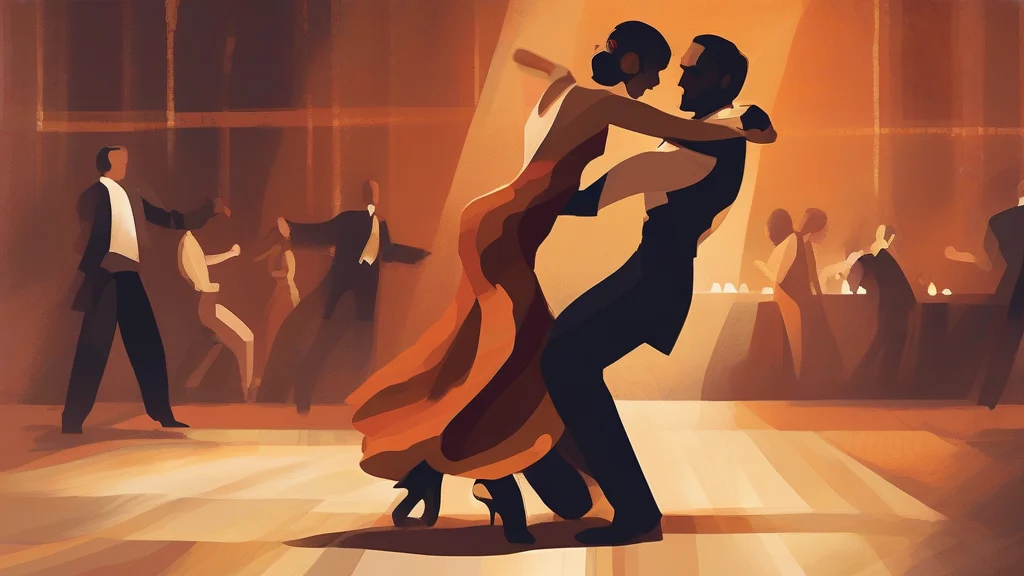
A tango is a passionate partner dance that originated in Argentina and is now performed internationally. It is known for close contact, sweeping turns, and dramatic pauses, with the dancers using deliberate changes of direction and posture to create tension and dramatic effect. The term can also refer to music written for the dance or to a cocktail traditionally made with rum and lime juice. As a verb, “to tango” means to dance in this style. Although the dance is strongly associated with Argentina, it became part of international popular culture during the twentieth century, especially through stage and screen performances. Tango combines precise technique with expressive movement, making it both a competitive and social dance. Its name and precise historical origins have been debated, but the modern word is securely borrowed from Spanish.
A dance of Argentine origin performed by couples, characterized by close contact, sweeping movements, and dramatic pauses; also, music for such a dance or a rum-and-lime cocktail.
"The tango was performed beneath the warm lights of a crowded ballroom."
When referring to the cocktail, the word is normally used in a drinks context.
To move in the manner of a tango, typically with sweeping steps and dramatic pauses.
"They tangoed across the floor as the band played."
This verbal use is relatively uncommon and may sound lively or informal.
Used when referring to multiple dances, performances, or cocktails of this kind.
"The club offered several tangos made with aged rum."
The tango's famously dramatic pauses are not empty space: they are an essential part of its controlled, flirtatious style.
Reviewed by Deb Chak, Editor. AI-assisted content curated by RJS Tech Solutions LLP.
Where does tango come from?
The English word entered through Spanish, where tango names both the dance and its music. The dance developed in Argentina during the late nineteenth century and spread internationally before the early twentieth century. The ultimate origin of the Spanish word has been debated, and confident claims about its earlier linguistic source remain controversial.
Related word forms
How tango is actually used
In its most common sense, tango refers to the Argentine dance and its music. As a verb, it is relatively uncommon and can sound lively or informal; the cocktail sense is usually identified by the surrounding drinks context.
Easily confused with tango
A tangle is a complicated mass or knot, whereas a tango is an Argentine dance, its music, or a rum-and-lime cocktail.