
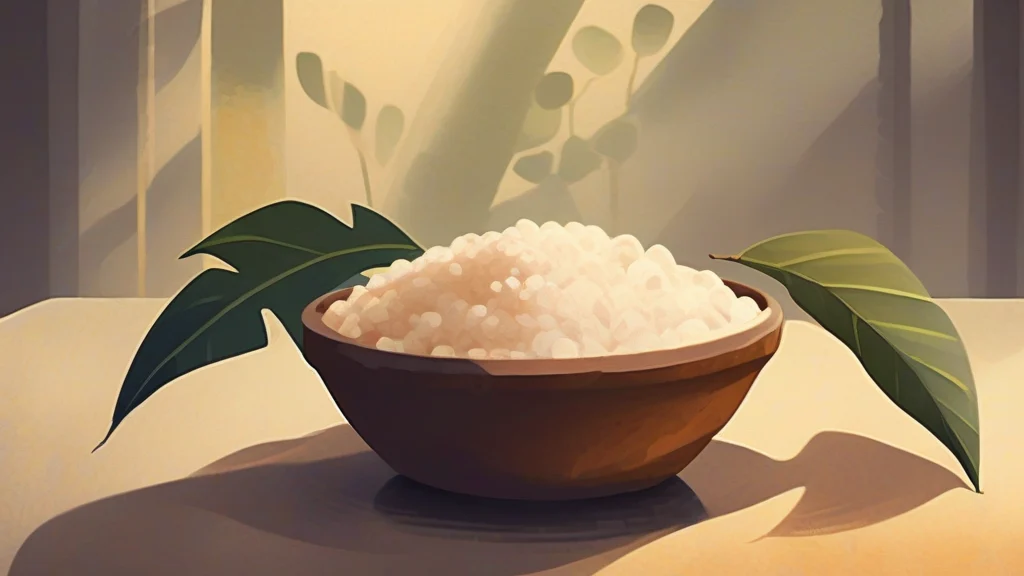
What does tapioca mean?
Tapioca is a starchy food made from cassava, a root crop native to South America. The word can refer to the dried starch itself, including fine powder and the small granules that swell and turn distinctly chewy when cooked. Those granules are now familiar as the pearls in bubble tea, but they also give their name to a milk-based pudding with a smooth, slightly elastic texture. Tapioca is valued because it thickens and sets mixtures while remaining light and gluten-free. In British and American culinary usage, the word usually denotes the starch rather than the cassava plant itself. The name arrived in English through Portuguese and ultimately comes from a Tupian term associated with cassava starch. Today the word is both a pantry ingredient and a globally familiar confection.
nounA starch obtained from cassava, sold as fine powder or dried granules that swell and become chewy when cooked. The word can also denote a pudding or dessert made with this starch.
- The dried granules or fine powder of starch obtained from cassava, especially the processed granules that become soft and chewy when cooked.
- A pudding or dessert prepared with cassava starch.
"She served chilled tapioca pudding topped with fresh fruit."
"The shop sells dried tapioca for making bubble tea at home."
"A chilled tapioca pudding is especially refreshing on a hot day."
Usually avoided because tapioca is normally an uncountable mass noun. The plural is chiefly useful for individual cooked granules, and pieces of tapioca is often more natural.
"She threaded the small cooked tapiocas onto the skewers."
Tiny, chewy, and deceptively named: tapioca pearls turn cassava starch into bubble tea's satisfying bottom layer.
Reviewed by Deb Chak, Editor. AI-assisted content curated by RJS Tech Solutions LLP.
Where does tapioca come from?
Tapioca entered English through the Portuguese word tapioca during the 18th century. Portuguese had borrowed the word from a Tupian term used in Brazil for the starchy substance obtained from cassava. The English culinary senses developed from that original reference to cassava starch.
How tapioca is actually used
In standard culinary English, tapioca is usually an uncountable mass noun when referring to the starch. A countable use is possible for individual cooked granules, although pieces of tapioca may sound more natural. Tapioca-based milk pudding may also sound nostalgic or old-fashioned in American English.
Easily confused with tapioca
Sago is a similar-looking name for a starchy food obtained from palm stems, whereas tapioca is made from cassava.