
What does tatting mean?
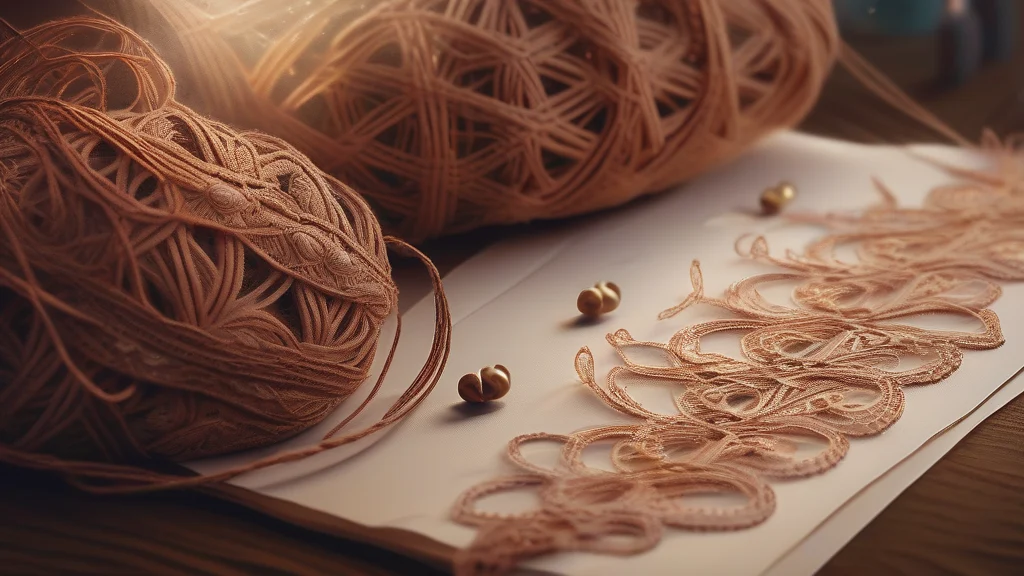
Tatting is a traditional craft for making lace by knotting and looping thread with a tatting shuttle or needle. Unlike knitted or crocheted fabric, the finished lace is built from a series of small knotted loops and often has a distinctive scalloped or geometric pattern. Today the noun is chiefly encountered in textile history, museum collections, and demonstrations of traditional handwork, although the technique is also practiced by contemporary crafters. Tatting can also be used as an informal verb meaning to botch, fumble, or make a mess of a performance. This older sense is chiefly British and carries a mildly disparaging or dismissive tone, so it should not be confused with praise for someone’s careful handiwork. The word is memorable because it names both an elegant historic lace-making technique and a colorful way of describing clumsy behavior.
The craft of making lace by repeatedly knotting and looping thread with a tatting shuttle or needle; also lace made by this process.
"The museum holds a delicate example of nineteenth-century tatting."
The usual noun use is uncountable, though separate pieces of lace are sometimes counted.
To botch, bungle, or make a mess of a performance or task.
"They spent the second half tatting the routine."
Informal, chiefly British, and mildly derogatory.
The usual noun use is uncountable; the plural is rare and denotes separate pieces of tatting.
"She mounted three small tattings from the collection."
Tatting turns loops and knots into delicate lace—and can also serve as a colorful insult for clumsy work.
Reviewed by Deb Chak, Editor. AI-assisted content curated by RJS Tech Solutions LLP.
Where does tatting come from?
English borrowed the word in the early nineteenth century from Scandinavian, where tatting denoted lace or lace-making. Its later use as a verb meaning to botch or fumble is chiefly associated with British usage and gives the word a dismissive secondary sense.
How tatting is actually used
The noun is a specialist but established English craft term. The verb is informal, chiefly British, and mildly derogatory; it describes clumsy performance rather than the lace-making craft.