
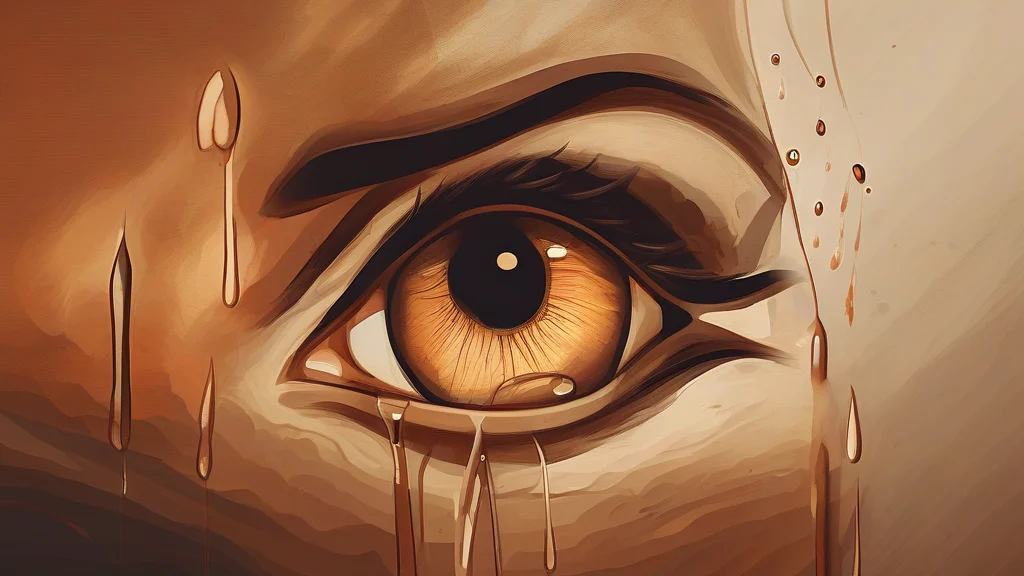
What does tear mean?
Tear has two quite different central meanings. As a noun, it is a drop of clear liquid that forms in the eye, typically because of emotion, pain, laughter, irritation, or yawning. Expressions such as “shed tears” and “in tears” are idiomatic and can indicate sadness, although tears may also accompany happiness or physical discomfort. As a verb, tear means to pull or rip something apart, as in “tear the paper in half,” and can also mean to move rapidly, as in “tear through the finish.” The noun and verb have separate Old English origins, yet modern speakers readily understand both uses. The word is useful because it connects a highly visible physical sign of emotion with actions involving force, speed, and destruction. Its several established phrases make it especially familiar in everyday speech and literature.
A drop of clear liquid that forms in the eye, usually because of emotion, pain, irritation, laughter, or yawning.
"A tear slipped down her cheek."
The plural tears is common in both literal and figurative expressions, especially with shed tears and in tears.
To pull or rip something apart, or to move rapidly and forcefully.
"The dog tore the wrapper open in seconds."
In its sense of moving rapidly, tear is often literary or idiomatic, as in “tear through the course” or “tear off.”
The regular plural of the noun is tears, as in “her eyes filled with tears.” The verb forms are tears and tore, with torn as the past participle.
"The child burst into tears when the storm began."
The word that means “a drop from the eye” and the word that means “to rip” come from separate Old English words.
Reviewed by Deb Chak, Editor. AI-assisted content curated by RJS Tech Solutions LLP.
Where does tear come from?
The noun meaning a drop from the eye comes from Old English tēar, a Germanic word that was also reflected in closely related Germanic languages. The verb meaning to rip or pull apart comes from a separate Old English word, teran, inherited from a Germanic root associated with tearing or pulling. Modern forms such as tearful and teardrop developed from the noun, while the verb's rapid-motion sense is a later development based on the idea of moving forcefully.
Related word forms
How tear is actually used
The noun is standard in both formal and informal contexts. The verb meaning “rip” is common in general English, while the sense meaning “move rapidly” is more literary and is especially used in phrases such as “tear through” or “tear off.”
Easily confused with tear
Tear is pronounced /tɪər/ in British English or /tɛr/ in American English and means a drop of liquid or to pull something apart, whereas tier is pronounced /tɪər/ or /tɪr/ and means a level in a series.