
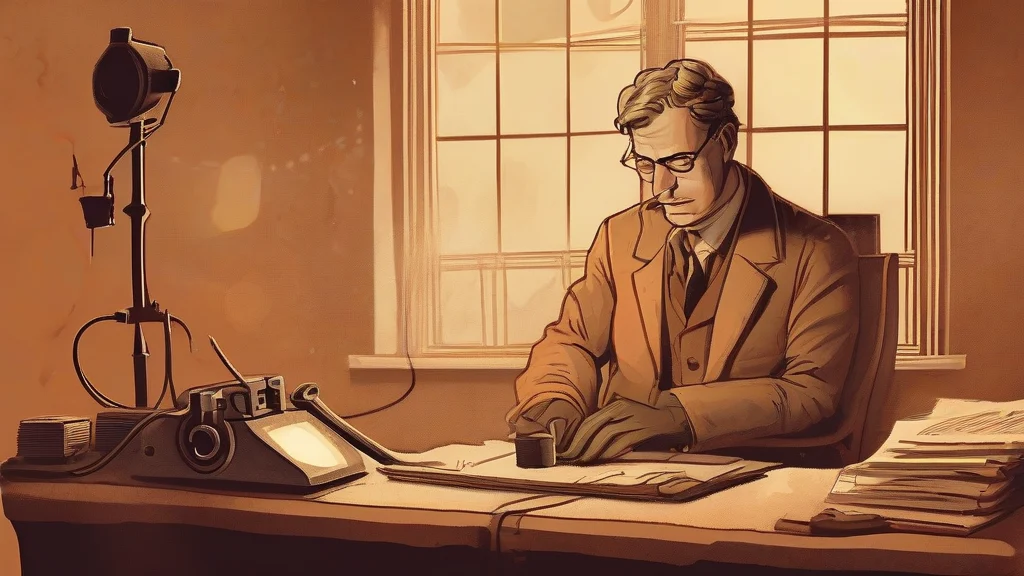
What does telegrapher mean?
A telegrapher is a person who operates a telegraph, transmitting or receiving messages through coded signals. Before telephones became widely available, telegraph operators connected distant places by converting information into electrical pulses; many became especially skilled at reading and sending Morse code. The word therefore evokes a distinctive occupational tradition involving accuracy, speed, and careful attention because a mistransmitted instruction could have serious consequences. Telegraphers also feature prominently in railway and military history, and their actions helped labor movements organize in the nineteenth and early twentieth centuries. In modern English, telegrapher is mostly encountered in historical, nostalgic, or specialized contexts rather than as a common contemporary occupation. The related terms telegraph operator and telegraphist are often used synonymously, while telegraph describes the communications system or its individual messages.
nounA person who sends or receives messages by telegraph, especially one trained to transmit coded signals.
- A person who operates telegraph equipment to transmit or receive messages, typically using coded signals.
"The telegrapher relayed the train's departure signal to the station master."
"During the strike, the telegraphers refused to handle messages that management had ordered them to suppress."
"She learned Morse code so she could work as a telegrapher at the coastal radio station."
The usual plural form, used when referring to several people who operated telegraphs.
"Several telegraphers worked around the clock to keep the railway lines connected."
In the age of Morse code, a trained telegrapher could turn an entire message into dots and dashes.
Reviewed by Deb Chak, Editor. AI-assisted content curated by RJS Tech Solutions LLP.
Where does telegrapher come from?
Telegrapher was formed in English by adding the occupational suffix -er to telegraph. Telegraph itself was borrowed from French télégraphe and ultimately combines Greek elements meaning “far” and “to write.” As electrical telegraph systems developed during the nineteenth century, the compound came to denote both the technology and its messages, while telegrapher came to denote the person who operated it.
Related word forms
How telegrapher is actually used
The word is occupational and now largely historical or nostalgic, though it remains common in accounts of telegraph systems, labor history, and historical fiction.