
What does teletype mean?
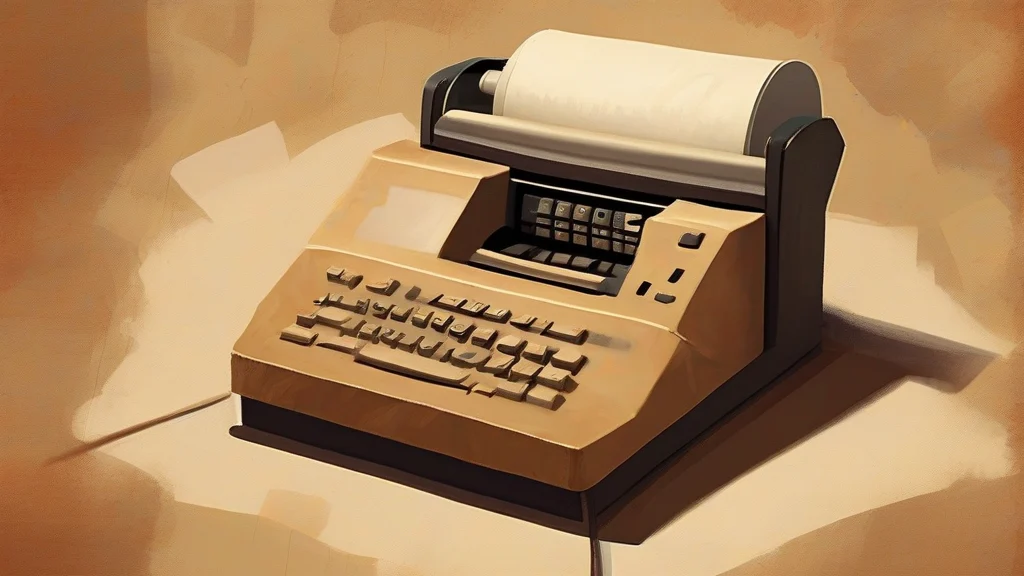
Teletype is a technical and now largely historical term for a typewriter-like terminal that converts typed text into electrical signals and prints messages received from a remote station. It may also denote the typed message itself or a communications network based on such terminals. The word is especially associated with telegraph, military, naval, and early data-processing contexts, where machines could receive routine reports, weather information, and operational traffic without a telephone operator interpreting it. Because each keystroke was transmitted character by character, teletype links provided a direct, recordable way to exchange text before email and modern packet networks became standard. In contemporary technical writing, the term survives in names for terminal protocols and in specialized military or archival systems. In ordinary conversation, however, it sounds dated and evokes electromechanical machines that clattered loudly as they printed incoming messages. Its combination of the Greek roots for “distant” and “type” neatly captures its original purpose: typing at a distance.
nounA teletype is a typewriter-like terminal that transmits and receives characters as electrical signals over a communications link. The term can also denote a typed message, a communications system, or a network using such terminals.
- A typewriter-like terminal for sending and receiving printed text over a telegraph, telephone, radio, or other communications link.
- A typed message or a communications system in which text is transmitted and received in this way.
"The newsroom received the overseas dispatch by teletype before midnight."
"During the storm, the duty officer sent the weather bulletin over the teletype."
"The museum restored an early teletype that printed messages arriving by wire."
The plural is teletypes. In attributive use, teletype normally remains uninflected, as in teletype terminal.
"The exhibition includes two teletypes formerly used by railway offices."
Before email, a teletype could clatter out a complete message across an ocean, turning typing into a telecommunications service.
Reviewed by Deb Chak, Editor. AI-assisted content curated by RJS Tech Solutions LLP.
Where does teletype come from?
The word was formed in the early twentieth century from tele-, representing Greek tēle, meaning “far” or “at a distance,” and type, from Latin typus, ultimately from Greek typos, meaning “model” or “type.” It was coined for telegraph devices that allowed operators to type and receive printed messages at a distance. Typography, typical, and typographic preserve the same Greek root behind type, while telegraph preserves the same tele- element.
Related word forms
How teletype is actually used
The term is dated in general use but remains familiar in technical, military, and historical contexts. It may refer broadly to a class of terminals or, in specialized writing, to a particular character-oriented terminal system or protocol.
Easily confused with teletype
A teleprinter is specifically a printing terminal that receives characters from a telegraph signal; teletype can also refer to a typed message, service, or network, so the terms overlap but are not always interchangeable.