
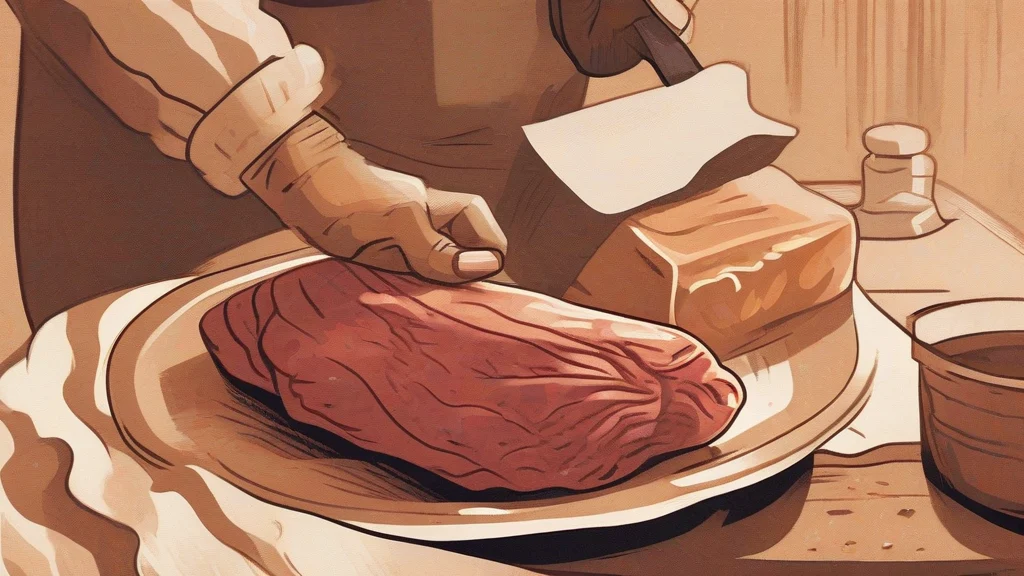
What does tenderizing mean?
Tenderizing is the present-participle and gerund form of tenderize, meaning to make something softer or more tender. Its dominant everyday use is culinary: a cook tenderizes tough cuts of meat by pounding, scoring, marinating, or treating them with an enzyme or other tenderizing agent. These methods interrupt tough muscle fibers or soften connective tissue, allowing the meat to become more delicate when cooked. The word can also be used figuratively, especially in discussions of art, storytelling, or interpersonal behavior, when a person or work makes a subject gentler or more emotionally receptive. Tenderizing is closely associated with American English, while British English commonly spells it “tenderising.” Although “tenderizing” is often mistaken for “tendering,” the two words have different central meanings: tenderizing changes the texture or emotional quality of something, whereas tendering usually means presenting or offering something.
verb (present participle and gerund; also used attributively)Tenderizing means making something, especially food, more tender. It can refer to using mechanical, chemical, or enzymatic methods to soften tough meat, or more figuratively to making a person or situation more gentle or responsive.
- Making food more tender, especially by mechanical means such as pounding or by chemical or enzymatic means such as marinating.
"The chef tenderized the beef by pounding it before adding the marinade."
"The butcher tenderizes the steaks before seasoning them."
"The film's careful direction tenderizes the emotional story without making it sentimental."
In meat cookery, tenderizing can mean piercing muscle fibers with blades; marinating is its slower, acid-based cousin.
Reviewed by Deb Chak, Editor. AI-assisted content curated by RJS Tech Solutions LLP.
Where does tenderizing come from?
Tenderize is an English verb formed from tender and the suffix -ize. Tender came into English through Old French tendre, ultimately from Latin tener, meaning “soft” or “delicate.” The verb tenderize developed within English as a productive way of describing the process of making something tender, especially food.
Related word forms
How tenderizing is actually used
Most common in American English and culinary contexts; British English normally uses the spelling “tenderising.” In cooking, tenderizing describes both an action and, attributively, an agent or substance that softens food.
Easily confused with tenderizing
Tenderizing means making something tender, whereas tendering commonly means offering or presenting something, as in tendering a payment or resignation.