
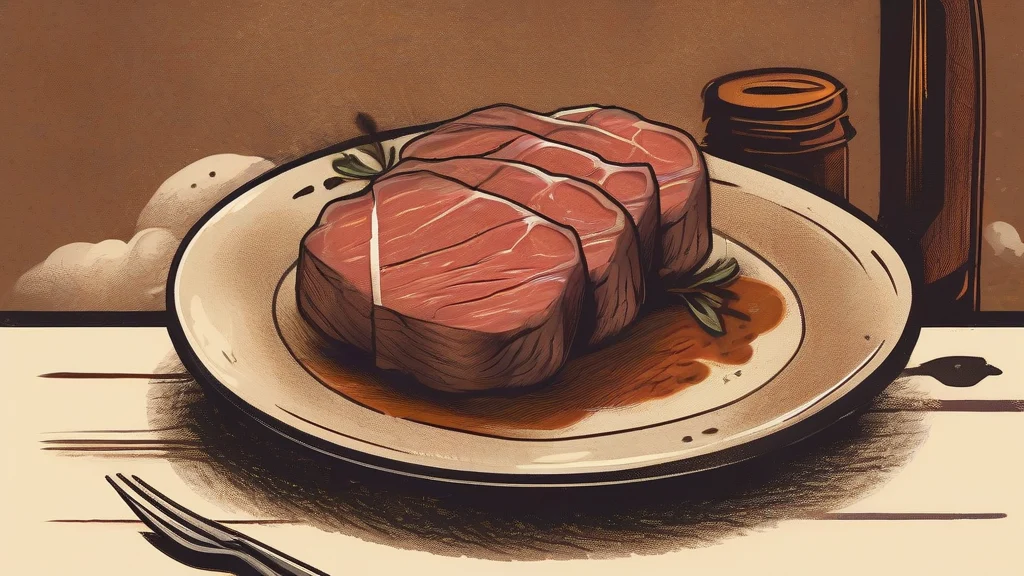
What does tenderloin mean?
Tenderloin most often names a particularly tender cut of meat from the loin of an animal. In American cooking it can mean the whole tenderloin of beef, a long, compact, boneless muscle, or the narrower tenderloin cut of pork. It should not be confused with sirloin, which is a different and generally larger section of beef, or with loin generally, which describes a broader region of meat. The word also has two figurative uses: it can characterize a person or thing that is vulnerable to pressure or attack, and it can refer to a district associated with vice, corruption, or organized crime. The second use is especially associated with American urban and political language. Because tenderloin specifies both a cut and a quality of tenderness, it is useful when precision matters in a menu or recipe. In British English, the pork cut is often called a pork fillet, while beef fillet usually refers to the same premium cut known in American English as tenderloin. Although the noun sounds straightforward, its figurative senses extend the food metaphor into ideas of exposure, vulnerability, and urban danger.
nounA tender cut of meat from the loin, especially a cut of beef or pork. Figuratively, it can denote a vulnerable person or thing, or a district associated with vice and corruption.
- A tender cut of meat from the loin, especially a cut of beef or pork.
- A person or thing that is vulnerable to attack, pressure, or exploitation.
- A district or area of a city associated with vice, corruption, or organized criminal activity.
"She pan-seared the pork tenderloin with rosemary and served it in thin slices."
"She pan-seared the pork tenderloin with rosemary and served it in thin slices."
"By then, the witness was political tenderloin: eager to please and easy to pressure."
The standard plural refers to multiple individual cuts of tenderloin.
"The restaurant serves tenderloins roasted with garlic and thyme."
The cut prized for being tender also became a metaphor for being exposed and vulnerable.
Reviewed by Deb Chak, Editor. AI-assisted content curated by RJS Tech Solutions LLP.
Where does tenderloin come from?
Tenderloin is an English compound formed in the early 18th century from tender and loin. The component words have separate histories: tender comes through Old French from Latin tener, while loin comes through Old French loigne. Its literal sense refers to a tender cut from the loin, and its later figurative uses extend the idea of a soft or exposed part to vulnerability and, by extension, places where vice flourishes.
How tenderloin is actually used
In American cooking, beef tenderloin usually means the whole boneless tenderloin muscle, while pork tenderloin is the narrower tender muscle from the loin. British usage often calls the pork cut a pork fillet. The person-as-vulnerable-target sense is figurative and relatively uncommon; the district sense is chiefly American and associated with urban or political commentary.
Easily confused with tenderloin
A sirloin is a larger cut from the rear portion of beef, whereas a tenderloin is the smaller, especially tender muscle within the loin.
Loin names the broader region of the animal's back and many cuts taken from it; tenderloin specifically identifies the especially tender cut.