
What does tequila mean?
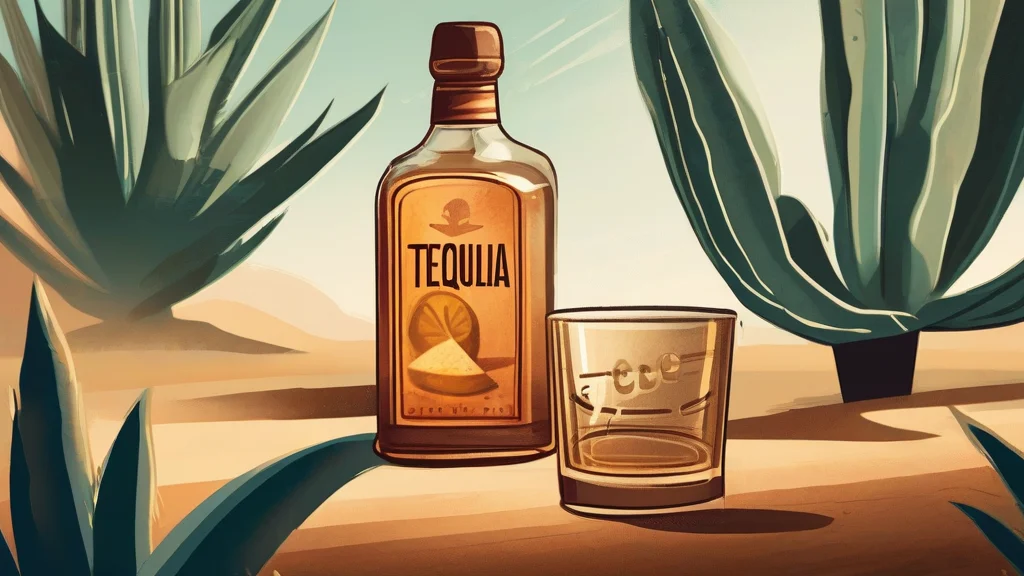
Tequila is a distilled alcoholic spirit made from the blue agave plant and produced within designated areas of Mexico. In English, it may denote the spirit itself, a small serving or shot, or an ingredient in a cocktail. It is commonly served with lime and salt and is also used in drinks such as the tequila sunrise. Although tequila and mezcal are sometimes treated as interchangeable in casual speech, they are not equivalent: tequila is specifically made from blue agave, while mezcal can be produced from several kinds of agave. The word carries strong associations with Mexican culture, celebrations, nightlife, and social drinking, as well as with traditional Mexican restaurants and culinary pairings. Its distinctive identity comes not only from its agave base but also from its protected production regions and regulated designation.
nounA Mexican distilled alcoholic spirit made from the blue agave plant, typically served neat or in cocktails. The name can also refer to a drink or shot of this spirit.
- A distilled alcoholic spirit made from the blue agave plant and recognized under the protected geographical designation tequila in Mexico.
- A drink, serving, or shot of tequila.
"She ordered a tequila with lime and salt."
"He poured two shots of tequila at the bar."
"The bartender made a tequila sunrise with orange and grapefruit juice."
The plural is used mainly for individual drinks or servings, especially in bar, party, and restaurant contexts.
"They ordered three tequilas with lime."
Mexican rules give tequila a protected identity: the spirit must be made from blue agave and produced in an approved region.
Reviewed by Deb Chak, Editor. AI-assisted content curated by RJS Tech Solutions LLP.
Where does tequila come from?
The English word comes through Mexican Spanish from tequila, the name associated with the agave spirit traditionally produced around Tequila in Jalisco, Mexico. The place-name is commonly traced to the Nahuatl tequitl, an old term connected with an intoxicating drink, although the precise historical development is debated. Spanish derivatives such as tequilana, tequileño, and tequilero were formed from the same name, while English retained tequila as the established term for the blue-agave spirit.
How tequila is actually used
In everyday English, tequila is commonly associated with shots, parties, salt, lime, and mixed drinks, although it also appears in more formal descriptions of spirits, cocktails, and food pairings.
Easily confused with tequila
Tequila is made specifically from blue agave and produced within designated Mexican regions, whereas mezcal is a broader category of agave spirit that may be made from several agave varieties.