
What does termite mean?
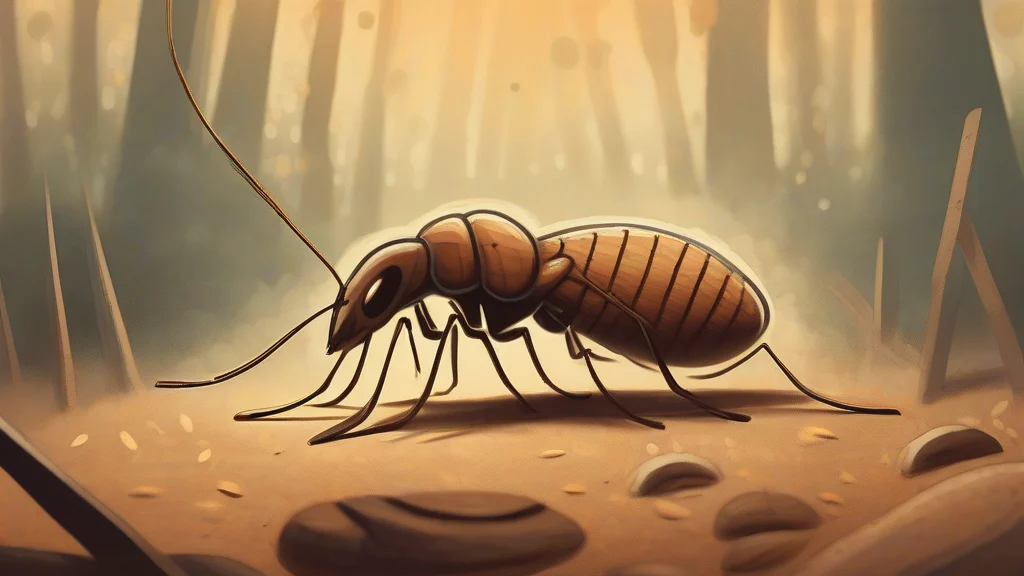
A termite is a social insect that lives in large colonies and feeds on cellulose, including the cellulose in wood, soil, and plant material. Members of a colony include workers, soldiers, and one or more reproductive insects, including a queen. Termites are commonly called white ants, especially in regions where they are familiar household pests, but they are not true ants; they belong to a different evolutionary branch and have soft-bodied, pale forms. Their feeding activity can make wooden buildings unsafe, yet termites also play an important ecological role by breaking down dead trees and returning nutrients to the soil. The word is normally used specifically for the insects, without figurative meanings common in everyday English. In writing, termite can refer to an individual member of a colony, while termites often refers either to several individuals or collectively to the colony. The familiar image of a white ant is therefore only partly accurate: termite is the scientifically appropriate name.
nounA termite is a social insect that typically has a pale, soft body, lives in colonies, and feeds on cellulose-rich material such as wood and soil. Although often called white ants, termites are not true ants.
- A termite is a social insect, often pale and soft-bodied, that lives in colonies and feeds on cellulose, particularly in wood or soil.
"The old wooden fence was weakened by a colony of termites."
"Termites consumed the timber supports beneath the porch."
"A queen termite and several workers were found inside the damaged beam."
The standard plural is termites; it can refer to several individual insects or, collectively, to members of a termite colony.
"The workers repaired the wall after removing the termites."
Termites may be called white ants, but they are not ants: they are the planet's remarkably effective recyclers of dead wood.
Reviewed by Deb Chak, Editor. AI-assisted content curated by RJS Tech Solutions LLP.
Where does termite come from?
The English word comes through French from Latin termitēs, a form associated with Greek tarmē, usually understood as “woodworm.” The name reflects termites’ long association with wood and their appearance to some observers as ant-like insects. The word entered English in the early modern period and was subsequently applied to the social insects now placed in the infraorder Isoptera within Blattodea.
Related word forms
How termite is actually used
The term is neutral in ordinary use. White ant is a familiar informal alternative, but it is taxonomically misleading because termites are more closely related to cockroaches than to true ants.
Easily confused with termite
A termite is an insect, whereas terminate is a verb meaning to bring an activity or process to an end.