
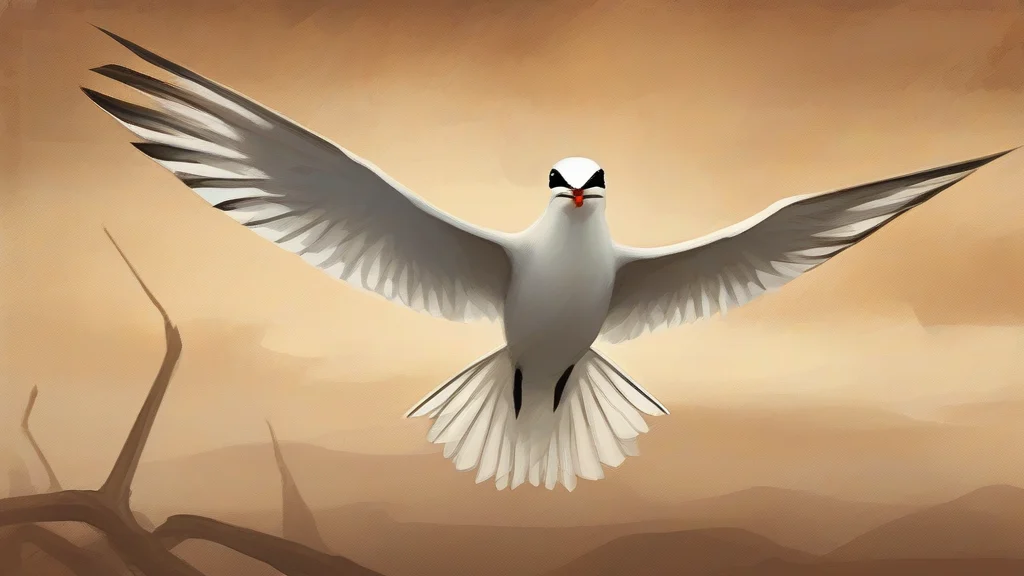
What does tern mean?
A tern is a small to medium-sized seabird related to gulls, although it is generally more slender and agile. Terns have narrow, pointed wings, short legs, and often a distinctive forked tail; many species also have sharply pointed bills adapted for catching fish. They are commonly seen along coasts, on islands, and around estuaries, and some species form large nesting colonies or undertake long seasonal migrations. The Arctic tern is especially famous for travelling between Arctic breeding territories and Antarctic feeding grounds. In a much less common golfing usage, a “tern” means a score of three, although the specialized term is now largely unfamiliar. For most modern speakers, tern denotes the bird rather than the numerical score. Learning the word adds a useful distinction to the vocabulary of coastal wildlife, birdwatching, and ornithology.
nounA tern is a small to medium-sized, gull-like seabird with slender wings, short legs, and often a deeply forked tail. In golfing terminology, a tern is a score of three, especially three strokes on a hole.
- A gull-like seabird of the family Sternidae, typically with long pointed wings and a forked tail.
- A score of three, especially three strokes on a golf hole.
"A flock of terns wheeled above the glittering sea."
"The tern plunged into the water and emerged with a small silver fish."
"She finished the final hole with a tern."
The usual plural is terns, especially when referring to the birds or the species collectively.
"The terns returned to the island colony each spring."
The Arctic tern crosses the globe from Arctic breeding grounds to Antarctic waters, making one of nature’s most extraordinary annual journeys.
Reviewed by Deb Chak, Editor. AI-assisted content curated by RJS Tech Solutions LLP.
Where does tern come from?
The English bird name dates from the medieval period and survives in the variant spelling terne. It belongs to a group of related Germanic forms, including Dutch stern and Swedish tärn. The precise ultimate origin of the bird’s name remains uncertain.
How tern is actually used
The ornithological sense is standard in British and American English. The golfing sense is rare and specialist, and most speakers would simply say “three” or “three strokes.”
Easily confused with tern
A tern is a seabird, whereas a turn is a rotation or an act of changing direction.