
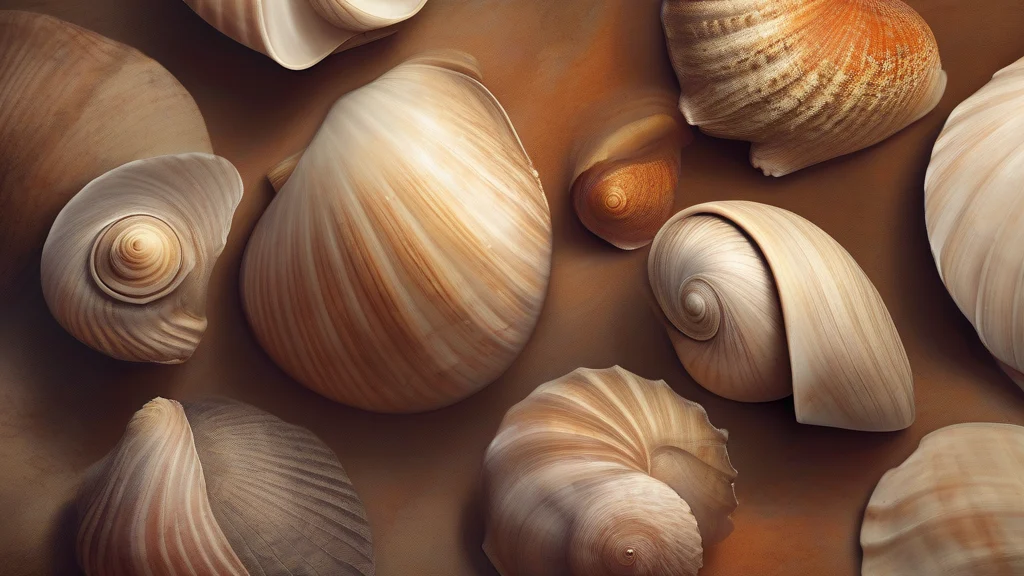
What does testaceous mean?
Testaceous is an adjective meaning “of or relating to a shell,” especially an animal or microorganism protected by a shell. It is especially common in zoology, paleontology, and natural-history description, where it can mark an organism as shell-bearing or indicate the presence of shell-like material. The word may also evoke a hard, protective outer covering, making it useful in precise descriptive prose. Its tone is learned and technical rather than conversational; outside specialist contexts, it often sounds deliberately precise or somewhat archaic. Although testaceous ultimately concerns shells, the adjective is not restricted to living molluscs: it can describe fossils and shell-like structures in other organisms. A writer might use it to highlight a genuinely shell-bearing form or to evoke the shape and texture of a shell. The word's compactness makes it memorable, while its specialized register makes it more useful in a scientific description or specialized essay than in ordinary conversation.
adjectiveHaving or consisting of a shell, especially a molluscan shell; also, resembling a shell in form or texture.
- Having or consisting of a shell, especially the external shell of an animal.
- Resembling a shell in form, texture, or protective character.
"The fossil's testaceous spiral preserves the chambered shell of an ancient marine animal."
"The fossil's testaceous spiral preserves the chambered shell of an ancient marine animal."
"Molluscs are among the most conspicuous testaceous animals on a modern reef."
From Latin for “made of shell,” testaceous packs an entire natural-history cabinet into three syllables.
Reviewed by Deb Chak, Editor. AI-assisted content curated by RJS Tech Solutions LLP.
Where does testaceous come from?
The adjective was borrowed into English in the 17th century from Latin testāceus, meaning “of or made of shell.” Its Latin formation uses testa, meaning “shell” or “earthenware vessel,” as its base. In English, it became especially useful in zoological description, where it could characterize shell-bearing animals and distinguish them from soft-bodied forms.
How testaceous is actually used
Chiefly used in zoology, paleontology, and other natural-history writing. It is a formal, specialist adjective rather than an everyday term, although it can be used more broadly for shell-like appearance or structure.