
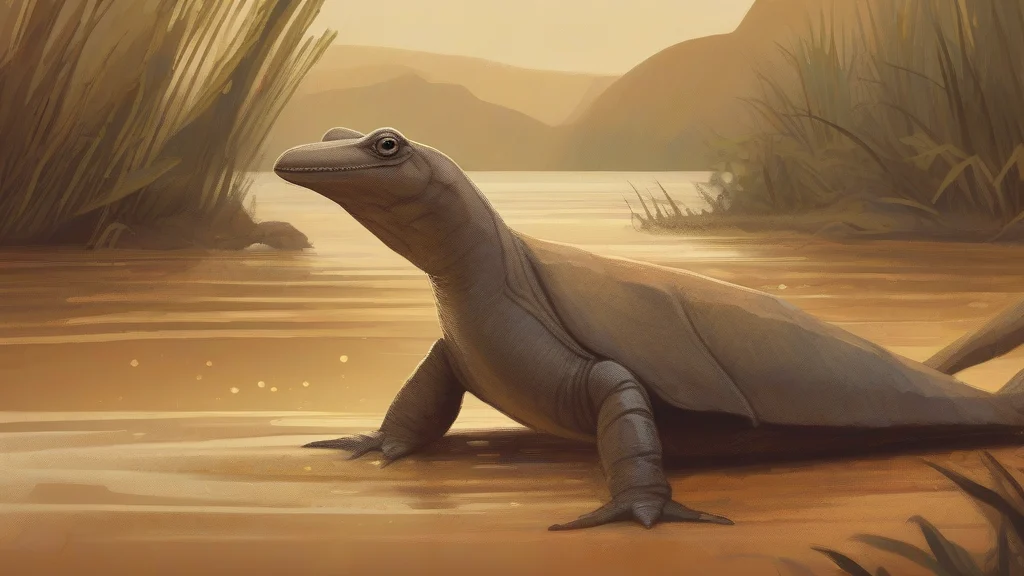
What does tetrapod mean?
In biology, a tetrapod is any vertebrate belonging to the lineage that includes amphibians, reptiles, birds, and mammals. Although the name literally suggests four feet, modern classification does not require a living tetrapod to have four visible limbs: snakes and whales remain tetrapods because their ancestors had paired appendages, and some later lineages reduced or lost them. The term is therefore most useful when discussing evolutionary relationships, anatomy, fossils, and biodiversity rather than merely counting an animal's legs. Outside technical contexts, it may be used in its older, plainer sense of a four-footed creature. That distinction makes the word useful in both zoology and general English: it can describe present animals while also preserving the history of an entire lineage.
nounAny vertebrate belonging to the lineage that includes amphibians, reptiles, birds, and mammals. In older or looser usage, it can mean a four-footed animal.
- A vertebrate belonging to the clade that includes amphibians, reptiles, birds, and mammals, defined by descent from ancestors with paired limbs rather than by currently possessing exactly four.
- In older or nontechnical usage, an animal with four feet or limbs.
"The fossil record reveals much about the movement and evolution of early tetrapods."
"Fossil trackways provide valuable evidence about the tetrapods that lived in an area millions of years ago."
"Although a snake has no legs, it is classified as a tetrapod because of its evolutionary ancestry."
The regular plural adds -s and is used for multiple animals or members of the tetrapod lineage.
"Early tetrapods evolved diverse ways of moving and feeding."
Snakes and whales are still tetrapods: their ancestors had four limbs, even though theirs vanished or became greatly modified.
Reviewed by Deb Chak, Editor. AI-assisted content curated by RJS Tech Solutions LLP.
Etymology of tetrapod
The name comes from Ancient Greek elements meaning “four” and “foot,” combining the numerical prefix tetra- with a form of the word for foot. It was introduced as a zoological term for four-footed creatures before becoming a formal designation for the major vertebrate lineage that includes amphibians, reptiles, birds, and mammals. Related English forms such as tripod and hexapod likewise combine Greek numerical prefixes with forms meaning “foot.”
Related word forms
How tetrapod is actually used
Primarily a formal zoological and palaeontological term. In general writing, it may be used more narrowly for an animal that visibly has four legs, but the scientific sense includes descendants whose limbs have been reduced, modified, or lost.
Easily confused with tetrapod
A quadruped is an animal that walks on four limbs, whereas a tetrapod is a vertebrate defined by evolutionary lineage, so limbless snakes and whales still count as tetrapods.