
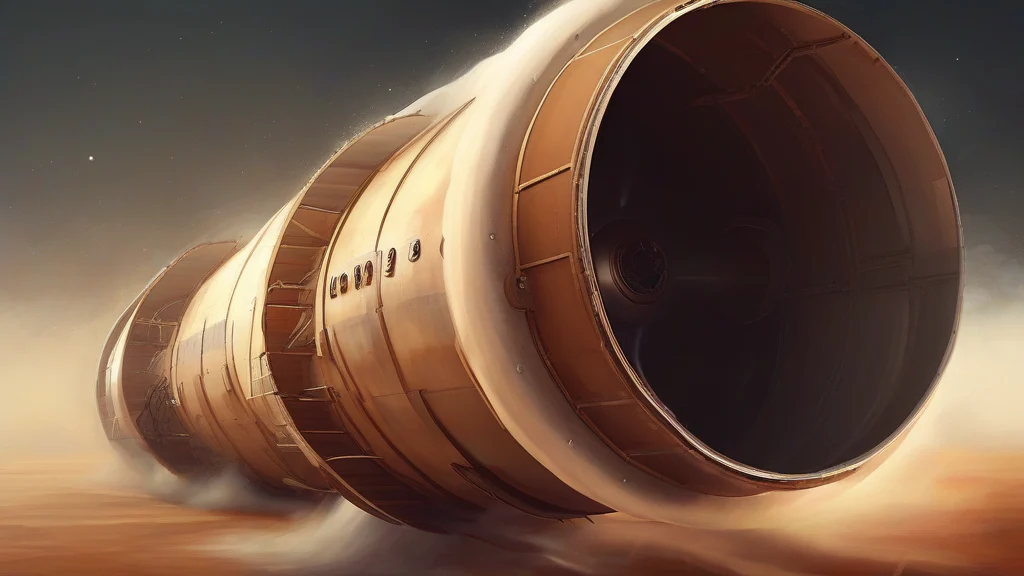
What does thruster mean?
A thruster is a propulsion device that produces a push or pull, especially one used to move or steer a spacecraft, vehicle, or vessel. The word is especially common in aerospace and engineering contexts, where thrusters can provide small, precisely controlled forces for changing orientation, adjusting course, or assisting with movement. A spacecraft might use a cluster of thrusters rather than relying on its main engine for every maneuver. The term can also refer to propulsion units based on expelled gas, such as ion or cold-gas thrusters. Although “engine” is sometimes used more broadly, “thruster” often emphasizes the direction and controlled application of thrust rather than the vehicle's primary power plant. In ordinary conversation, the word retains a technical or mechanical tone and evokes the maneuverability of spacecraft and other advanced vehicles. Its usefulness as a word lies in distinguishing a propulsion component from the force itself: a thruster produces thrust, and thrust moves the vehicle.
nounA thruster is a device or propulsion unit designed to produce thrust, especially one used to propel or maneuver a spacecraft, vehicle, or vessel. The term can also refer to an engine that supplies directional thrust rather than serving as the vehicle's principal propulsion system.
- A propulsion device or engine that produces thrust, especially for maneuvering a spacecraft, vehicle, or vessel.
"The spacecraft fired its lateral thrusters to adjust its orbit."
"The submarine used a small thruster to move slowly forward."
"The engineers tested the ion thruster before installing it on the satellite."
The plural is commonly used for multiple propulsion units, particularly the separate maneuvering thrusters on a spacecraft or vehicle.
"The command fired the thrusters briefly to reposition the satellite."
A spacecraft's thrusters may provide only a modest push, but even a tiny amount of carefully directed thrust can change its path across the heavens.
Reviewed by Deb Chak, Editor. AI-assisted content curated by RJS Tech Solutions LLP.
Where does thruster come from?
Thruster is an English formation from thrust plus the suffix -er, a suffix used to indicate an agent or device that performs an action. The base thrust comes from Old Norse þrysta, meaning to press or thrust, and developed into the English word for a forceful push or forward motion. By adding -er, English could form a noun referring to a device that generates that force. The word’s modern spaceflight associations developed alongside the broader technological use of propulsion systems.
How thruster is actually used
In technical contexts, “thruster” usually refers to a relatively compact propulsion unit, often used for precise maneuvering or attitude control. In aerospace usage, the term may distinguish a maneuvering propulsion system from a vehicle's main engine.
Easily confused with thruster
A thruster is the device that produces propulsion, while thrust is the force or motion generated.