What does thyrsus mean?
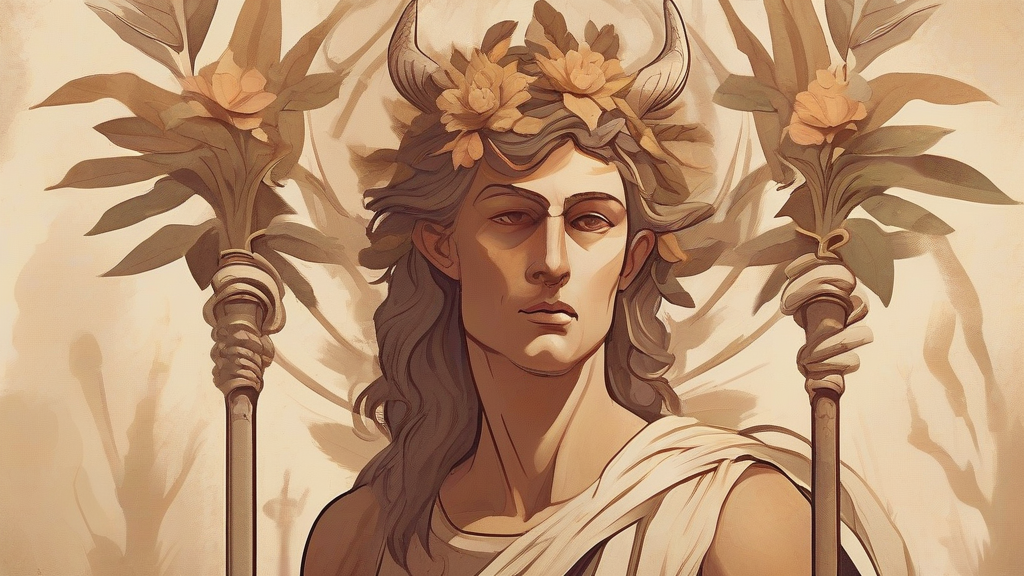
The thyrsus is a distinctive staff or sceptre that appears in ancient Greek art and literature, often carried by satyrs and other mythological figures. Typically decorated with leaves, flowers, or other ornaments, the thyrsus symbolizes the connection between the natural world and the divine. In art and literature, the thyrsus is often used to represent the wild, untamed aspects of nature, and is frequently associated with fertility and rebirth. Despite its origins in ancient Greek culture, the thyrsus has continued to inspire artists and writers throughout history, serving as a powerful symbol of the natural world and its mysteries.
nounA thyrsus is a staff or sceptre, typically decorated with leaves, flowers, or other ornaments, carried by a satyr or other mythological figure in ancient Greek art and literature.
- 1. A staff or sceptre, typically decorated with leaves, flowers, or other ornaments, carried by a satyr or other mythological figure in ancient Greek art and literature.
"In the painting, the satyr is depicted carrying a thyrsus, symbolizing his connection to the natural world."
"In the painting, the satyr is depicted carrying a thyrsus, symbolizing his connection to the natural world."
Reviewed by Deb Chak, Editor. AI-assisted content curated by RJS Tech Solutions LLP.
Etymology of thyrsus
The word 'thyrsus' is derived from the Greek word θύω (thýō), meaning 'to fumigate', which is likely related to the staff's association with the natural world and the use of herbs and incense in ancient Greek rituals.
Usage notes
The thyrsus is typically used in formal or artistic contexts to represent the connection between the natural world and the divine.