
What does tigrine mean?
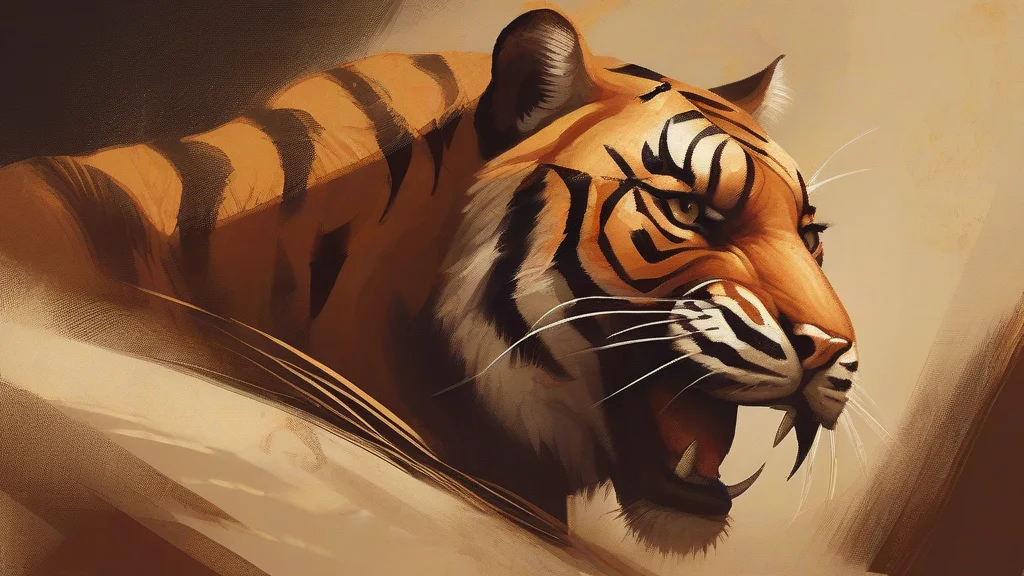
Tigrine is a rare English adjective meaning resembling a tiger, especially in color or markings. It can describe the tawny, brownish-orange hue associated with tigers as well as markings that recall a tiger's striped coat. The word is precise rather than broadly decorative: when a writer chooses “tigrine,” the tiger reference is deliberate, suggesting the characteristic warmth, intensity, or striping of the animal's appearance. Although usable for people, plants, clothing, landscapes, and animals, it is most natural when discussing physical coloration. Tigrine is uncommon in everyday conversation but may occur in literary description, natural-history writing, fashion commentary, or other contexts requiring an evocative but exact vocabulary. Its rarity gives it an elegant, slightly antique quality. The word ultimately comes from Latin, where tigrinus meant “of or resembling a tiger.” Today it remains more appropriate in formal or artistic prose than as a general synonym for “brownish orange,” though its specificity can make it valuable when precision matters.
adjectiveResembling a tiger, especially in coloration; tawny or tiger-colored.
- Resembling a tiger, especially in coloration; tawny or tiger-colored.
"The cat's tigrine coat blended with the tall grass at sunset."
"The leopard displayed the same tigrine coloring as its wild ancestor."
"Her tigrine scarf echoed the warm brown and black stripes of the surrounding woodland."
Tigrine turns the word “tiger” into a description of color: tawny, striped, and tiger-like.
Reviewed by Deb Chak, Editor. AI-assisted content curated by RJS Tech Solutions LLP.
Where does tigrine come from?
English borrowed tigrine from Latin tigrīnus, an adjective meaning “of or like a tiger.” The Latin word in turn derived from tigris, the source of English tiger and tigress and also the name of the Tigris River. The English adjective developed in descriptive and zoological usage before becoming chiefly literary and uncommon in modern speech.
How tigrine is actually used
Rare and chiefly literary or descriptive. It is more likely to appear in careful writing about animal coloration than in everyday speech.