
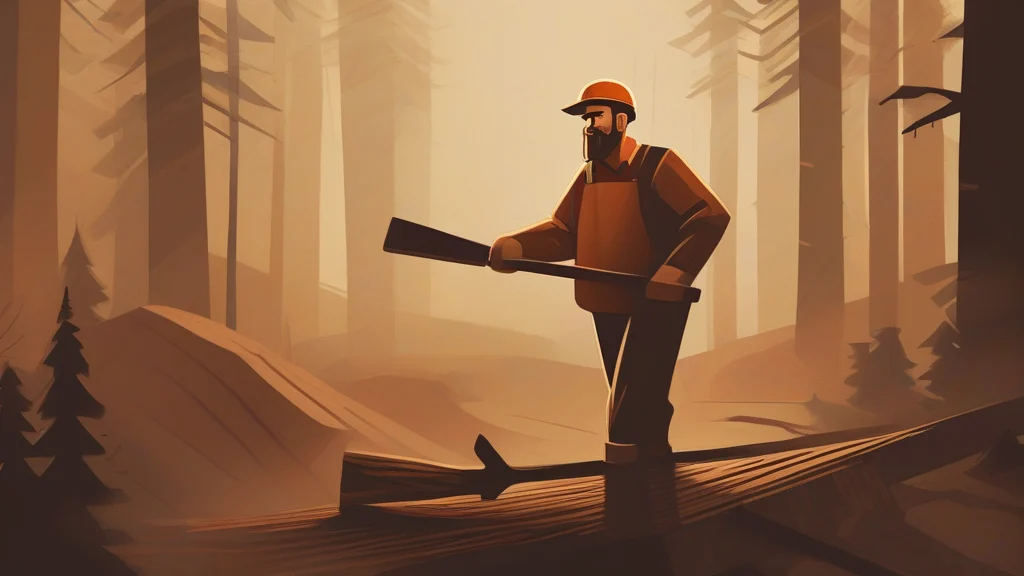
What does timberman mean?
Timberman denotes a man whose work involves timber, especially felling trees or handling logs for commercial use. It is an occupational noun rather than a trade title for the owner of a timber yard or a modern craft such as carpentry. The older occupational label timberman can be found in British English and historical accounts, while lumberjack is generally more familiar in present-day North American English; logger is also common there and can cover a wider range of forestry work. In older literature, timberman may simply identify a woodsman without specifying the exact task, whereas lumberjack more specifically evokes someone who cuts and moves logs. The word has the familiar English compound shape material plus worker, comparable to goldsmith, and its irregular plural, timbermen, reflects the traditional -man/-men pattern. As a result, timberman is useful in historical reading and descriptive prose, though lumberjack, logger, or woodsman may sound more idiomatic in a modern setting. It can also carry a traditional, frontier, or working-class atmosphere that the broader term logger does not necessarily share.
nounA man whose work involves timber, especially someone who fells trees or handles logs for commercial use.
- A man employed in work involving timber, especially the felling of trees or the handling of logs.
"The timberman guided the crew through the dense stand of Douglas fir."
"The timberman inspected the trunk before the crew began cutting."
"The novel portrays him as a timberman whose life is tied to the surrounding forest."
The irregular plural changes -man to -men, following the traditional English plural pattern.
"A crew of timbermen worked through the forest."
Like goldsmith, timberman is a classic English material-plus-worker name—a trade condensed into a single word.
Reviewed by Deb Chak, Editor. AI-assisted content curated by RJS Tech Solutions LLP.
Where does timberman come from?
The word is an English occupational compound of timber and man. Timber descends from Old English timber, meaning wood or building material, while man comes from Old English mann; the compound timberman is attested in the nineteenth century as a name for a worker in timber. Its semantic relatives include timber, timbered, and timbering, all formed within the English timber word family.
How timberman is actually used
A traditional occupational term that can sound literary, historical, or regional in contemporary use. It is less common in everyday North American English, where terminology varies with the worker's specific role.
Easily confused with timberman
A lumberjack specifically fells and often transports trees, whereas timberman is a broader traditional term for a man who works with timber.