
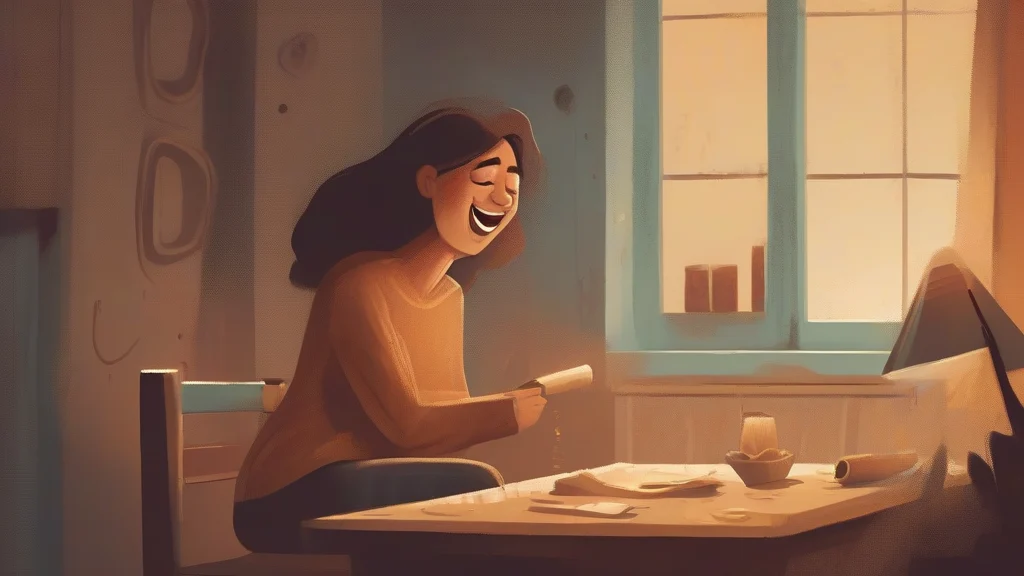
What does tittered mean?
Tittered is the past tense of titter, a verb for laughing softly, briefly, or in a way that suggests nervousness, embarrassment, or deliberate restraint. It often describes laughter that is partly hidden, such as giggling behind a hand or reacting to something amusing but uncomfortable. The word is common in informal speech and writing, although it can sound slightly old-fashioned in some contexts. Its sound is expressive: the repeated consonants and short vowels convey a small, high-pitched laugh that seems to escape control. Tittered can also imply ridicule or mockery, especially in constructions such as “tittered at,” where the laughter is directed toward a person, an idea, or an event. As a past-tense verb form, it is particularly useful for narrating a brief, specific reaction rather than describing a person's general habit of laughing.
verbTo laugh in a small, often nervous, embarrassed, or deliberately suppressed way.
- To laugh softly or in a restrained, nervous, or embarrassed manner.
"The children tittered behind their hands when the speaker mentioned the surprise party."
"The audience tittered when the presenter accidentally read from the wrong page."
"She tittered at the absurdity of the situation while trying to maintain a serious expression."
Tittered captures the particular sound of laughter trying not to give itself away.
Reviewed by Deb Chak, Editor. AI-assisted content curated by RJS Tech Solutions LLP.
Where does tittered come from?
Titter is an English verb recorded by the early 17th century and is generally understood as an imitative formation modeled on the sound of small, restrained laughter. Its precise historical development is not fully certain, and no direct cognates are securely established. The modern past-tense form tittered follows the ordinary inflection of the English verb.
Related word forms
How tittered is actually used
Generally informal, this word can suggest nervous, embarrassed, childish, or deliberately restrained laughter. When someone tittered at another person's misfortune, the word may carry a dismissive or mocking connotation.