
What does tomahawking mean?
Tomahawking means using a tomahawk to strike, attack, or kill. The word is the present participle of the verb “tomahawk” and occurs chiefly in descriptions of historical warfare, frontier conflict, and similar violent settings. It may also be used figuratively for a forceful or destructive attack, especially when the speaker characterizes a method as crude, brutal, or indiscriminate. Tomahawking is uncommon in ordinary contemporary conversation, so its appearance often gives a passage a historical, literary, or deliberately archaic tone. The word also reflects the long history of the tomahawk in North American warfare, where axes of this kind were used as weapons as well as tools. Because the expression can evoke a romanticized frontier past, modern writers frequently use it ironically or critically rather than neutrally. Its clearest modern function is therefore to describe an unmistakably violent act while often suggesting criticism of the means used.
verbUsing a tomahawk to strike, attack, or kill someone. By extension, it can describe attacking or destroying something with brutal force.
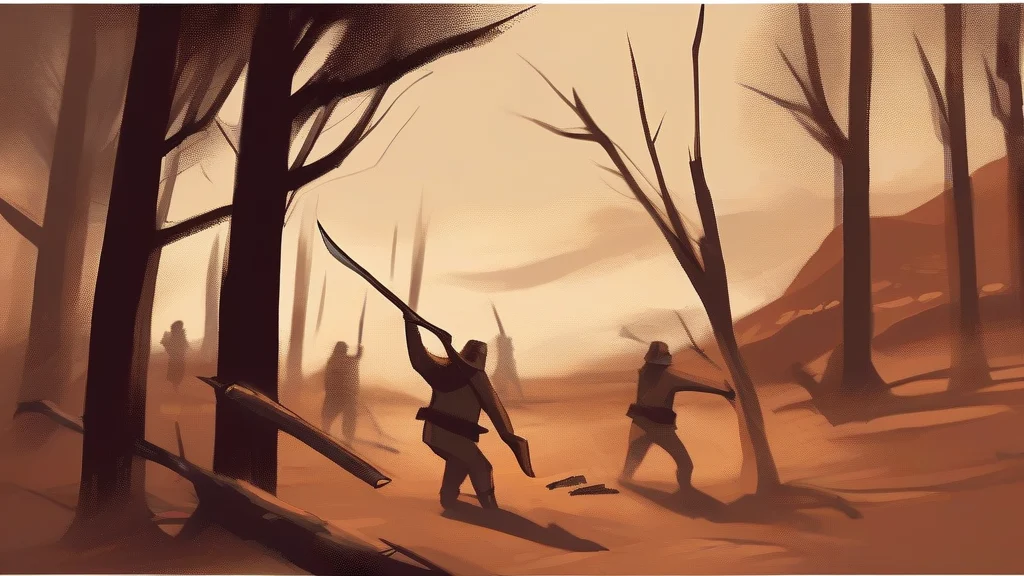
- Striking, attacking, or killing with a tomahawk, especially in a historical, frontier, or combat setting.
"The raiders attempted to breach the barricade by tomahawking the wooden gate."
"The novel describes warriors tomahawking their way through the enemy camp."
"His criticism dismissed the opponents' tactics as little more than tomahawking the door."
Tomahawking preserves the double impact of its sound and imagery: a striking blow delivered with an axe that became a symbol of frontier warfare.
Reviewed by Deb Chak, Editor. AI-assisted content curated by RJS Tech Solutions LLP.
Where does tomahawking come from?
“Tomahawking” was formed from the English verb “tomahawk” by adding the present-participle suffix “-ing.” The word “tomahawk” entered English during the colonial period from an Algonquian language spoken in eastern North America, although the precise source etymon is disputed. In English it refers to an axe or hatchet used as a weapon and has also been used figuratively for forceful attack.
How tomahawking is actually used
This is the present participle of “tomahawk.” It is uncommon in modern everyday language and is most often encountered in historical narratives, descriptions of combat, or figurative criticism of violent or indiscriminate tactics.