
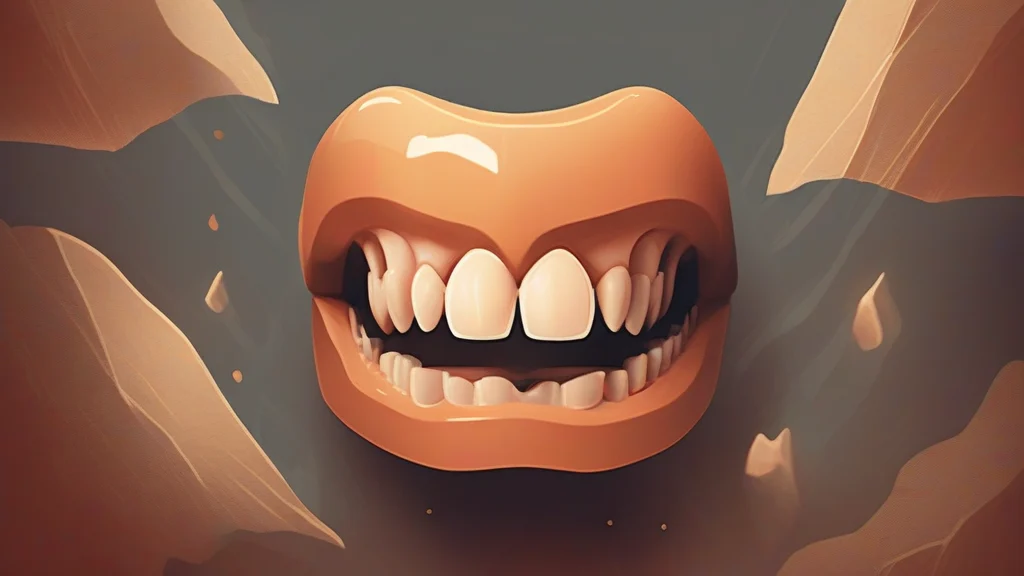
What does toothily mean?
Toothily is an uncommon English adverb meaning “in a toothy or tooth-baring manner,” typically describing a smile or expression in which the teeth are prominently displayed. Its use focuses attention not merely on the presence of teeth but on the conspicuous or conspicuous-looking way they are shown. For example, “The tiger bared its teeth toothily” characterizes the animal’s manner of revealing its teeth rather than simply stating that it threatened someone. The word is chiefly literary, descriptive, or deliberately unusual; in everyday speech, speakers are more likely to say “smiling broadly,” “grinning,” or “baring its teeth.” Although it can serve as a precise alternative to a longer phrase, it is easily perceived as affected in casual conversation. Its particular interest lies in converting the adjective “toothy” into an adverb that captures both visible teeth and the manner of displaying them.
adverbIn a toothy or tooth-baring manner, especially with the teeth prominently displayed.
- In a manner characterized by prominently visible or bared teeth.
"The spaniel sat by the hearth, smiling toothily at the arriving postman."
"The spaniel sat by the hearth, smiling toothily at the arriving postman."
"A painted sign depicts a pirate grinning toothily above the tavern door."
Reviewed by Deb Chak, Editor. AI-assisted content curated by RJS Tech Solutions LLP.
Where does toothily come from?
Toothily is formed from the adjective toothy with the adverbial suffix -ly. Toothy is itself derived from tooth, whose Old English ancestor was tōþ. English tooth and the dental, dentition, and dentist families ultimately reflect a common Indo-European root associated with the teeth, although toothily itself is an English formation.
How toothily is actually used
Uncommon and mildly literary; it focuses on the manner of displaying teeth and can sound more affected than ordinary alternatives such as “with visible teeth” or “grinning broadly.”