
What does topgallant mean?
Topgallant is an uncommon word that can describe something very high or lofty, especially when used figuratively for language, ambition, or achievement. It also has a specific nautical meaning: a noun for the sail rigged above the topsail on a square-rigged ship. The adjective survives chiefly in formal or literary contexts, where it suggests exceptional height, distinction, or splendor rather than merely being physically elevated. The nautical noun likewise appears mainly in descriptions of ships, sailing, and historical maritime scenes. Although now uncommon outside those settings, topgallant is useful because it links an ordinary idea of height with a specialized shipboard term and carries a distinctly archaic, elevated tone that ordinary words such as “high” and “lofty” do not always convey.
Very high or lofty, especially in a figurative or literary sense.
"Despite his topgallant ambitions, he remained modest in private."
Chiefly literary, formal, or archaic; it often suggests distinction or splendor as well as height.
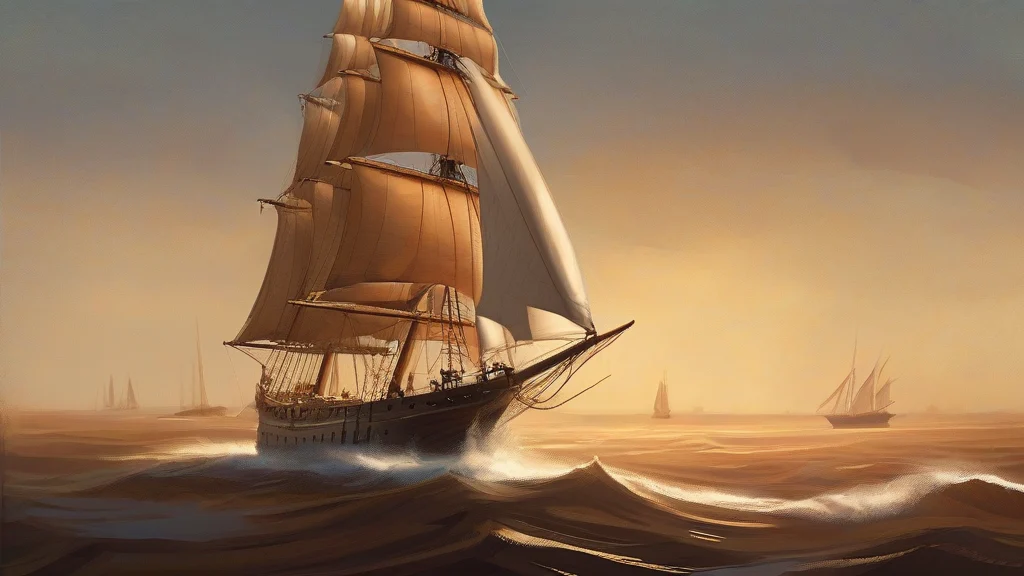
The sail rigged above the topsail on a square-rigged ship; also the topmost section of the mast carrying it.
"A gust tore the upper edge of the topgallant."
A specialist nautical term, now encountered mainly in maritime writing and historical descriptions.
Used for multiple sails or mast sections of this type.
"The square-rigged ship carried two topgallants above its topsails."
A topgallant lived above the topsail—one step closer to the sky than the rest.
Reviewed by Deb Chak, Editor. AI-assisted content curated by RJS Tech Solutions LLP.
Where does topgallant come from?
Topgallant dates from the 17th century. It combines top, long used in nautical English for an upper part of a ship or mast, with gallant, an English borrowing of Old French galant meaning brave or splendid. The compound became a nautical term for the sail and rigging above the topsail and was also used figuratively for what is very high or lofty.
How topgallant is actually used
The word is literary or archaic outside specialist nautical writing. Its figurative use has a grand, elevated register, while the nautical use is technical.