
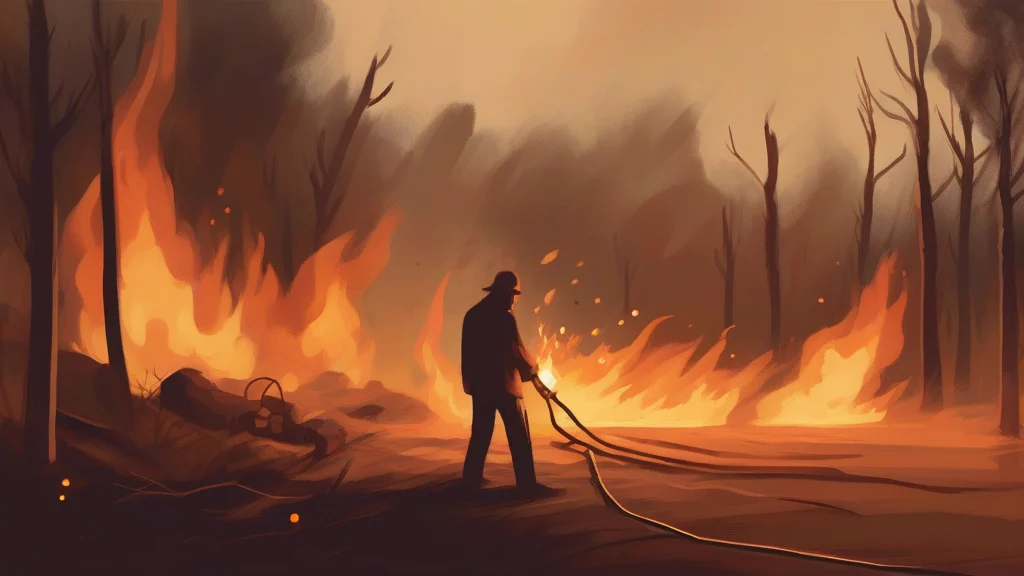
What does torching mean?
Torching is the present-participle and gerund form of the verb torch. Its central meaning is to set fire to something with a torch, or to burn something deliberately and destructively. In contemporary news coverage and everyday descriptions of riots, protests, and confrontations, torching commonly refers to cars, trucks, buildings, or other property being set alight. The word is usually transitive: people torch a vehicle rather than “torch at” it. Although closely related to the general idea of burning, torching suggests a conspicuous and often violent act of destruction, carrying stronger emotional and legal associations than a neutral reference to combustion. In phrases such as “the torching of vehicles,” the form functions as a gerund noun. Torching is especially useful because it identifies not merely fire but the deliberate, torch-like character of an act.
verb (present participle and gerund of torch)Torching means setting something on fire with a torch or deliberately burning it, often as an act of destruction. In modern usage, it often refers to vehicles, buildings, or other property being set alight.
- Setting something on fire with or as if with a torch, especially deliberately and destructively.
"Protesters torched several vehicles outside the station."
"The video showed rioters torching cars outside the station."
"They spent the afternoon torching the old fence with a blowtorch."
A torch can light a path or erase everything in its wake; torching captures the destructive second possibility.
Reviewed by Deb Chak, Editor. AI-assisted content curated by RJS Tech Solutions LLP.
Where does torching come from?
Torching is the -ing form of torch, a late Middle English word borrowed from Old French torche, which came from late Latin torcha. The ultimate origin of torcha is uncertain, so more remote etymological claims should be treated cautiously. Related English forms such as torchlight and torcher were developed from the same source word.
Related word forms
How torching is actually used
Torching is normally transitive: people torch a car, building, or other object. In news reports and informal descriptions of riots or protests, it is strongly associated with deliberate and destructive burning and may carry legal as well as emotional connotations.
Easily confused with torching
Touching means making physical contact or causing an emotional response, whereas torching means setting something on fire.
Torturing means inflicting severe pain or suffering, while torching specifically means burning something with or as if with a torch.