
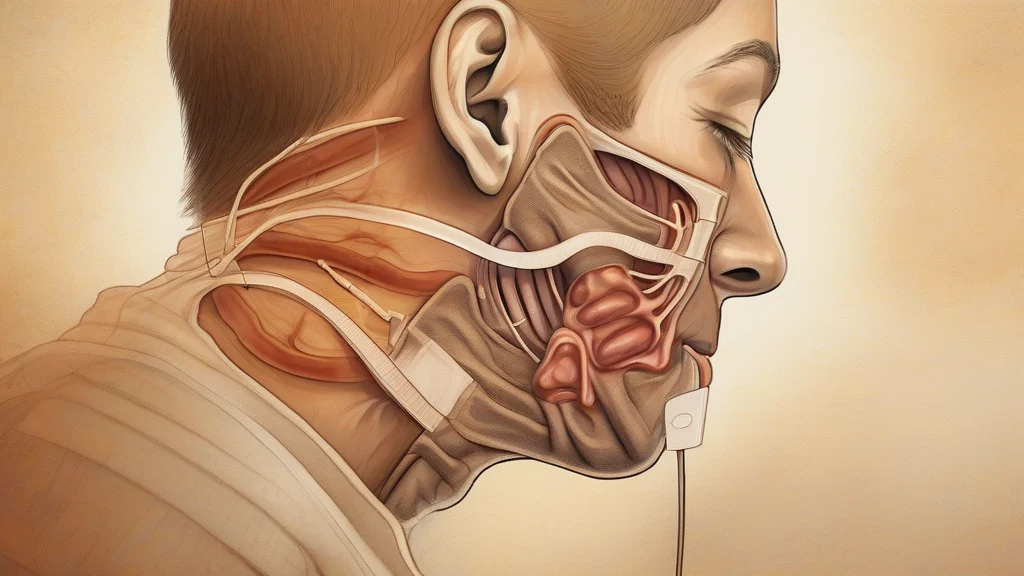
What does tracheostomy mean?
Tracheostomy is a medical term for a surgical opening made through the neck into the trachea, the windpipe. The procedure is performed when a patient needs a secure airway because of obstruction, long-term breathing difficulty, or the need for prolonged respiratory support. The opening may be maintained with a tracheostomy tube, which helps air pass into the lungs and can also support suctioning or speaking mechanisms. In everyday conversation, the word is usually encountered in clinical reports and discussions of intensive care, surgery, or long-term respiratory care. Although tracheotomy is sometimes used interchangeably, tracheostomy generally emphasizes the created and maintained opening. The term is derived from Greek words for the windpipe and mouth, reflecting the procedure's anatomical structure. Knowing the distinction is useful because tracheostomy describes both the operation and, in some contexts, the airway that remains afterward.
nounA surgical procedure in which an opening is made through the neck into the trachea, usually to maintain an airway or assist breathing. The term can also refer to the resulting opening itself, which is commonly kept open with a tube.
- The surgical creation of an opening through the neck into the trachea, usually to secure or maintain an airway.
- The resulting opening in the trachea, especially one maintained with a tracheostomy tube.
"After the emergency tracheostomy, the patient was moved to the intensive care unit with a breathing tube in place."
"The medical team performed a tracheostomy after the patient's airway became obstructed."
"Her permanent tracheostomy allows her to breathe without a tube passing through her mouth."
The standard plural refers to multiple tracheostomy procedures or established tracheostomy openings.
"The chart documented several tracheostomies performed during the hospital's emergency-care training."
A tracheostomy can turn a blocked airway into a direct route for breathing, making it one of medicine's most consequential ways to keep air moving.
Reviewed by Deb Chak, Editor. AI-assisted content curated by RJS Tech Solutions LLP.
Where does tracheostomy come from?
The word combines Greek trachea, meaning “windpipe,” with -stomy, a medical suffix derived from Greek stoma, meaning “mouth” or opening. In its literal sense, the term means an opening into the trachea. The modern surgical sense developed through nineteenth-century medicine, when techniques for establishing and maintaining an airway through the neck became established.
Related word forms
How tracheostomy is actually used
This is a formal medical term used in hospitals and healthcare settings. Tracheotomy remains common and may be used synonymously, although tracheostomy more specifically suggests a maintained opening.
Easily confused with tracheostomy
A tracheotomy is an incision made into the trachea, whereas a tracheostomy usually refers to the more established opening created through the neck and maintained with a tube; the terms are sometimes used interchangeably.