
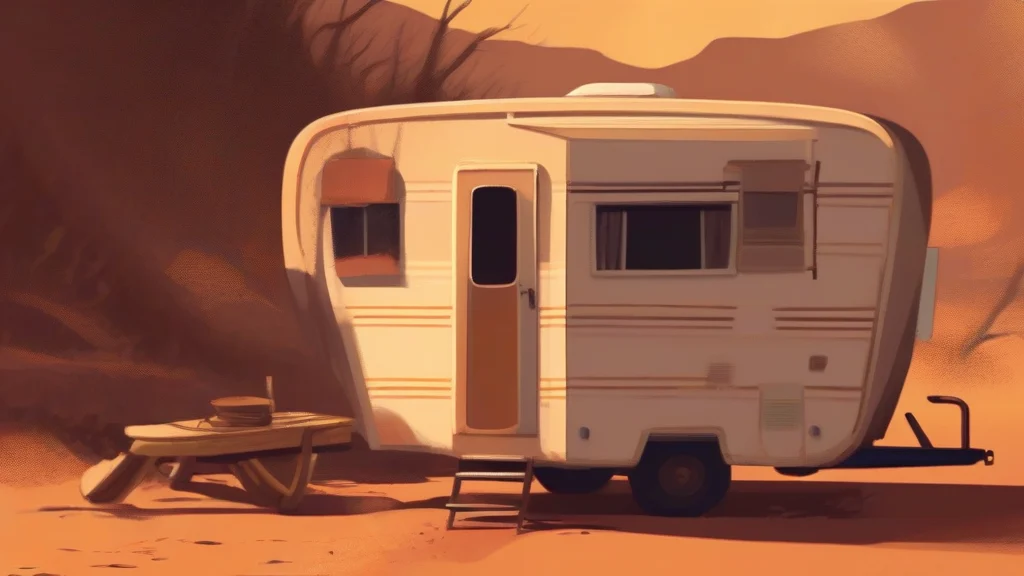
What does trailer mean?
A trailer is, most commonly, a vehicle or detachable unit that is pulled behind a car, truck, or other vehicle. Trailers can carry cargo, provide living space, or serve as mobile shops, food stalls, and recreational vehicles. In entertainment, a film trailer is a short piece of promotional material that previews the story, tone, or characters of an upcoming film or programme. The word can also be used as a verb, meaning to pull or carry something behind, to follow behind, or, less commonly, to grow or extend along the ground. Although trailer is perfectly standard as a noun, trail is usually preferred as a verb in everyday speech. The word’s development reflects its history: it originally referred to someone who followed behind or trailed others, before coming to denote a vehicle that follows behind another one. Its modern uses retain that sense of movement and accompaniment, whether practical, cinematic, or figurative.
A vehicle, camper, or detachable unit designed to be pulled behind another vehicle; also, a short film or sequence of images advertising or previewing an upcoming work.
"We rented a trailer for the journey and stopped at a campsite along the route."
In British English, caravan is often preferred for a towed holiday vehicle. Film trailer and movie trailer are especially established expressions.
To pull or carry something behind one; to follow behind or lag behind; more rarely, to grow or extend along the ground.
"A child walked along the path, trailing a small kite behind him."
This use is less common than the noun and is often replaced by the more usual verb trail, especially in informal speech.
The standard plural of the noun is trailers. It refers to more than one towed vehicles or units, or to multiple promotional films or sequences.
"The trailers were lined up beside the warehouse."
The word once described someone who followed behind; today it most often names the machine that follows a vehicle, or the short film that promises a bigger story.
Reviewed by Deb Chak, Editor. AI-assisted content curated by RJS Tech Solutions LLP.
Where does trailer come from?
Trailer was formed in English from trail and the suffix -er, originally referring to a person or thing that follows behind or trails. The sense for a vehicle pulled behind another developed in the early twentieth century. The separate sense for a short promotional film also became established in the early twentieth century, when such previews were commonly shown before feature presentations.
Related word forms
How trailer is actually used
The noun is neutral and common in British and American English, although caravan is especially common in British English for a towed holiday vehicle. The verb is relatively uncommon; trail is usually the more natural choice. As a noun, trailer can also refer to a mobile home in North American English.
Easily confused with trailer
A trail is a path or route through a landscape, whereas a trailer is a vehicle or unit that is towed behind another vehicle.
A trailer is designed to be pulled behind a vehicle, while a trawler is a fishing boat equipped with nets.