
What does transmarine mean?
Transmarine is a formal adjective meaning beyond or across the sea, and therefore overseas. It can describe places, journeys, trade, or connections with people and cultures located on the other side of a sea or ocean. The word has a literary and historical character, suggesting distance, exploration, and the crossing of maritime boundaries; for that reason, it appears more often in books, archival writing, and specialized geographical contexts than in ordinary modern speech. Although many ordinary speakers would use overseas or transoceanic instead, transmarine remains useful when the emphasis is specifically on something lying beyond the sea from the speaker's or writer's perspective. Its clearest use is in phrases such as transmarine trade or transmarine voyage, where it evokes movement and connection across maritime distances.
adjectiveSituated beyond or across the sea; overseas. In modern usage, the word is mainly formal or literary and often appears in historical, geographical, or maritime contexts.
- Situated beyond or across the sea; overseas.
- In historical and literary contexts, relating to journeys, trade, peoples, or places beyond the sea.
"The port became a center of transmarine trade."
"The museum's collection includes maps made for transmarine voyages."
"In that period, the city was a hub for transmarine trade."
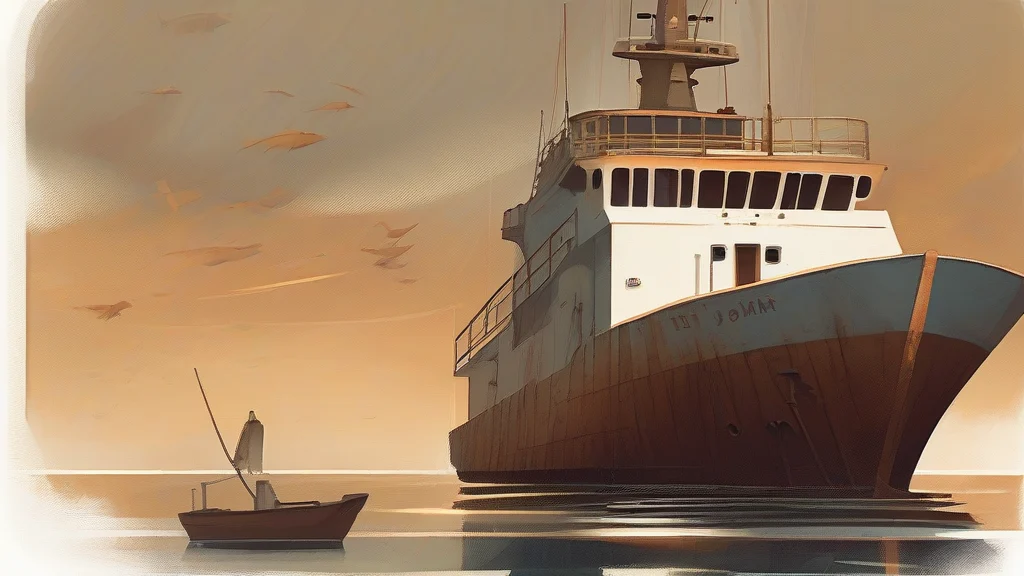
Transmarine carries the sea in its name and points beyond it: it describes what lies on the far side of the water.
Reviewed by Deb Chak, Editor. AI-assisted content curated by RJS Tech Solutions LLP.
Where does transmarine come from?
The word derives from Latin transmarinus, formed from trans-, meaning across or beyond, and marinus, meaning of the sea. It entered English in the early 17th century in contexts describing places, journeys, or peoples beyond the sea. Its relatives marine, maritime, submarine, and ultramarine preserve the same Latin root mar, meaning sea, although their prefixes give them different senses.
How transmarine is actually used
This is a formal, literary, and relatively uncommon word. It is more often encountered in historical writing, travel literature, and descriptions of overseas connections than in everyday conversation.
Easily confused with transmarine
Maritime means relating to the sea or seafaring, especially in connection with coastal or inland waters, whereas transmarine means beyond or across the sea.
Ultramarine is now primarily a color name, while transmarine is an adjective meaning situated beyond the sea or overseas.