
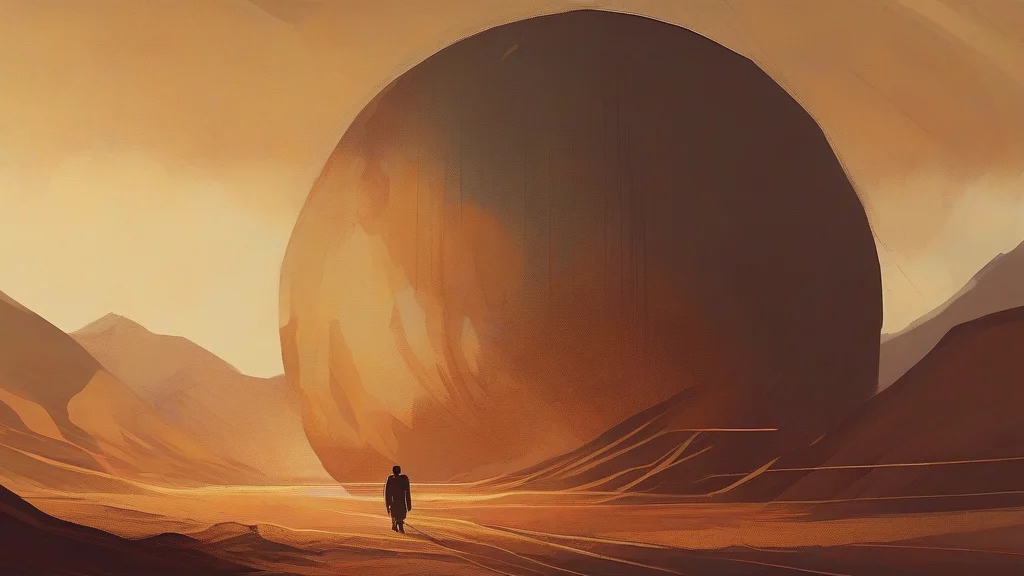
What does transmundane mean?
Transmundane is an uncommon formal adjective meaning beyond the world, especially in a celestial, spiritual, or supernatural sense. It can describe realms, experiences, entities, or forms of knowledge that lie outside ordinary physical existence. The word carries a strongly elevated and often mystical tone, so it is more typical of theology, philosophy, literary criticism, and imaginative writing than of everyday conversation. Transmundane is closely related in meaning to words such as celestial, heavenly, astral, and supernatural, but it often implies a broader contrast between the ordinary material world and a transcendent reality beyond it. It should not be confused with mundane, which means ordinary or worldly and therefore expresses a contrast from the opposite direction. Although precise, poetic, and intellectually expressive, transmundane can sound deliberately archaic or grandiose in modern prose, so its use is most effective when a genuinely elevated or otherworldly subject is in view.
adjectiveBeyond the world; belonging to or existing in a celestial, spiritual, or supernatural realm beyond ordinary physical existence.
- Beyond the world; celestial, spiritual, or existing in a realm beyond ordinary material existence.
"The novel portrays the hero's journey through a transmundane landscape of spirits and visions."
"The philosopher argued that the divine order is fundamentally transmundane and cannot be fully perceived through material experience."
"The painting's dark, luminous figures seem to inhabit a transmundane world between myth and dream."
Transmundane is a way of saying “beyond the world” without leaving the dictionary behind.
Reviewed by Deb Chak, Editor. AI-assisted content curated by RJS Tech Solutions LLP.
Where does transmundane come from?
Transmundane was formed in English from Latin trans-, meaning beyond or across, and mundus, meaning world, with the adjective suffix -ane. Its closest familiar relative is mundane, which developed from Latin mundanus, meaning of the world. The same Latin root also underlies world and worldly through the Romance languages, while prefixed forms such as extramundane and supramundane preserve the idea of being outside or above the world.
How transmundane is actually used
Transmundane is formal, literary, and relatively uncommon. It is especially associated with theology, philosophy, fantasy, and descriptions of realities considered beyond the ordinary physical world.
Easily confused with transmundane
A mundane thing belongs to the ordinary material world, whereas a transmundane one is beyond that world in a celestial, spiritual, or supernatural realm.