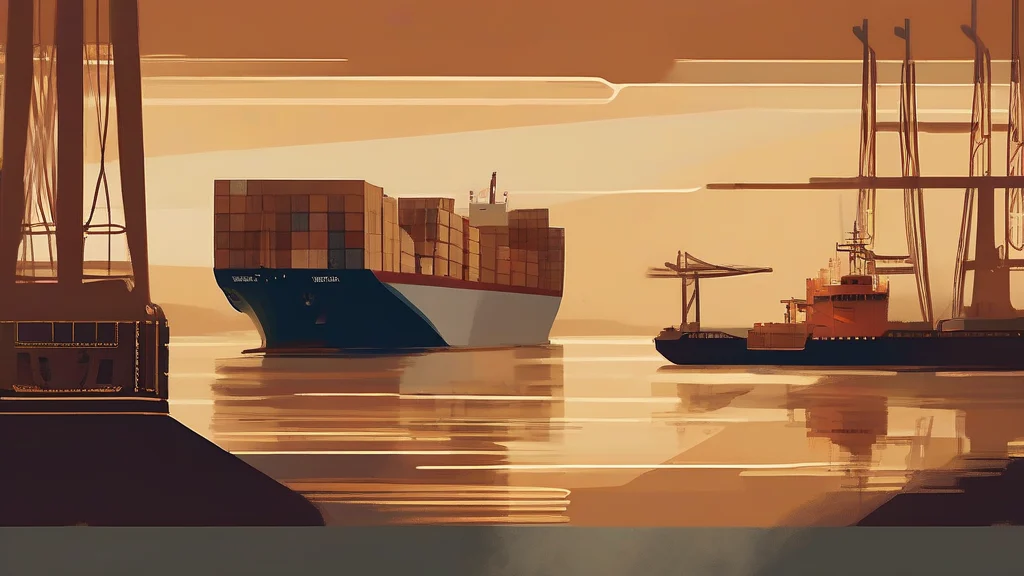
What does transshipping mean?
Transshipping refers to the process of transferring goods or cargo from one ship to another, often in a different port, for onward transportation. This practice is commonly used in international trade and logistics to facilitate the movement of goods between different regions. Transshipping allows for greater flexibility and efficiency in the transportation of goods, as it enables the use of different ships, routes, and modes of transportation. The process typically involves the transfer of goods from one vessel to another, which can be done using specialized equipment such as cranes and forklifts. Transshipping plays a crucial role in global supply chains, enabling the rapid and reliable movement of goods across long distances.
nounThe act or process of transferring goods or cargo from one ship to another, often in a different port, for onward transportation.
- The act of transferring goods from one ship to another.
- A method of transportation where goods are moved from one ship to another during transit.
"The logistics company specialized in transshipping containers from Asia to Europe."
"The transshipping of goods from one vessel to another allowed for faster delivery."
"The company's transshipping operations were disrupted due to bad weather."
The plural form is used when referring to multiple instances of transshipping.
"The company handled several transshippings per week."
Reviewed by Deb Chak, Editor. AI-assisted content curated by RJS Tech Solutions LLP.
Etymology of transshipping
The term 'transshipping' originated from the combination of 'trans-' meaning 'across' or 'beyond' and 'shipping' referring to the transportation of goods by ship. The practice of transshipping has been in existence for centuries, with early examples dating back to the age of sail. The development of modern logistics and transportation systems has further facilitated the growth of transshipping, making it an essential component of global trade.
How transshipping is actually used
Transshipping is commonly used in the context of international trade and logistics. It can also refer to the transfer of goods between different modes of transportation, such as from ship to truck or train.