
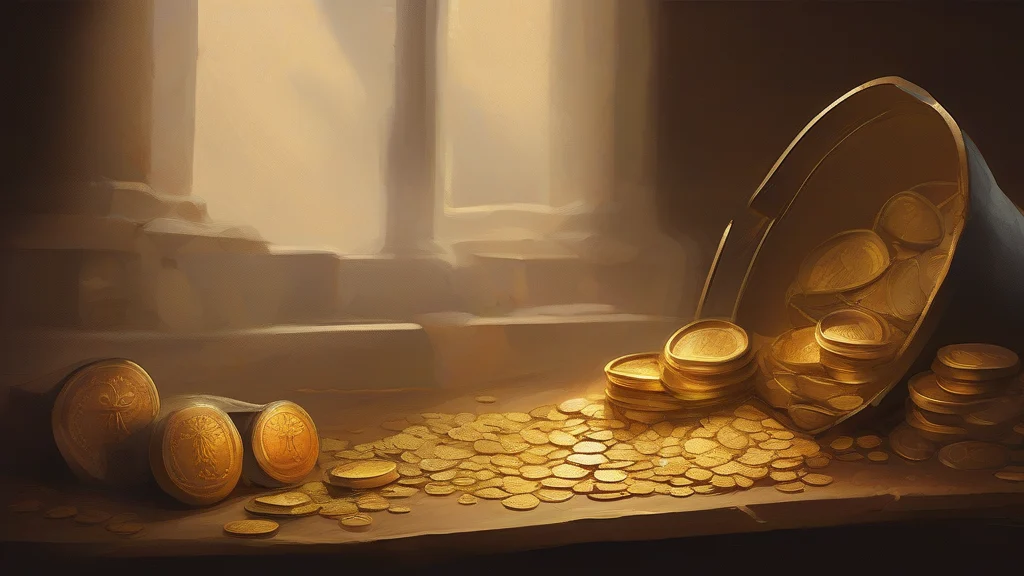
What does treasure mean?
Treasure is a word for possessions that are valuable because of their worth, rarity, beauty, or personal importance. In its most familiar noun sense, it refers to money, jewelry, gemstones, artwork, or other valuables, and it often appears in stories and expressions involving hidden or discovered riches. By extension, people call a much-loved person, a memorable experience, or a rare quality a “treasure,” conveying deep affection or appreciation rather than merely financial value. As a verb, “to treasure” means to hold someone or something in especially high esteem. The word appears in familiar phrases such as “buried treasure” and “treasure hunt,” but it can also sound poetic or sentimental when applied to relationships and memories. Its long history connects it with the idea of a secure storehouse for valuables, making it both a practical term for riches and a powerful word for what is deeply cherished.
Valuable objects collectively, especially money, jewelry, gemstones, or artworks; wealth or possessions of notable value. By extension, a person, thing, quality, or experience regarded as exceptionally precious.
"The museum houses a remarkable collection of ancient treasure."
The figurative sense is common in affectionate or literary contexts: “a treasure of,” “a treasure to someone,” or “a real treasure.”
To regard or cherish someone or something as very valuable; to hold dear. In an older and less common use, to store up or accumulate something as treasure.
"They treasured the tradition of celebrating together every year."
This verb is more formal and expressive than “value” and is especially frequent in writing about relationships, memories, and ideals.
The countable plural is “treasures.” The noun can also be used uncountably for valuables or wealth in general, as in “a treasure trove of information.”
"The stories contained treasures of practical wisdom."
The word behind “thesaurus” originally pointed to a storehouse: Greek thēsauros meant a place where treasure was kept.
Reviewed by Deb Chak, Editor. AI-assisted content curated by RJS Tech Solutions LLP.
Where does treasure come from?
The word comes through Middle English and Old French from Latin thesaurus, meaning “treasure” or “treasury.” Latin thesaurus was borrowed from Greek thēsauros, a word for a storehouse or place where valuables were kept. The same Greek and Latin heritage also lies behind English “treasury” and “treasurer,” while “thesaurus” preserves the Greek term for a collection of valuable or useful writings.
Related word forms
How treasure is actually used
As a noun, “treasure” can sound literary or emotional, especially when it describes a person, place, memory, or quality. As a verb, it is more formal and expressive than “cherish” and is often used in writing or speech about people, relationships, and valued experiences.
Easily confused with treasure
A treasury is a place or institution that holds money and valuables, whereas treasure refers to the valuable objects themselves.