
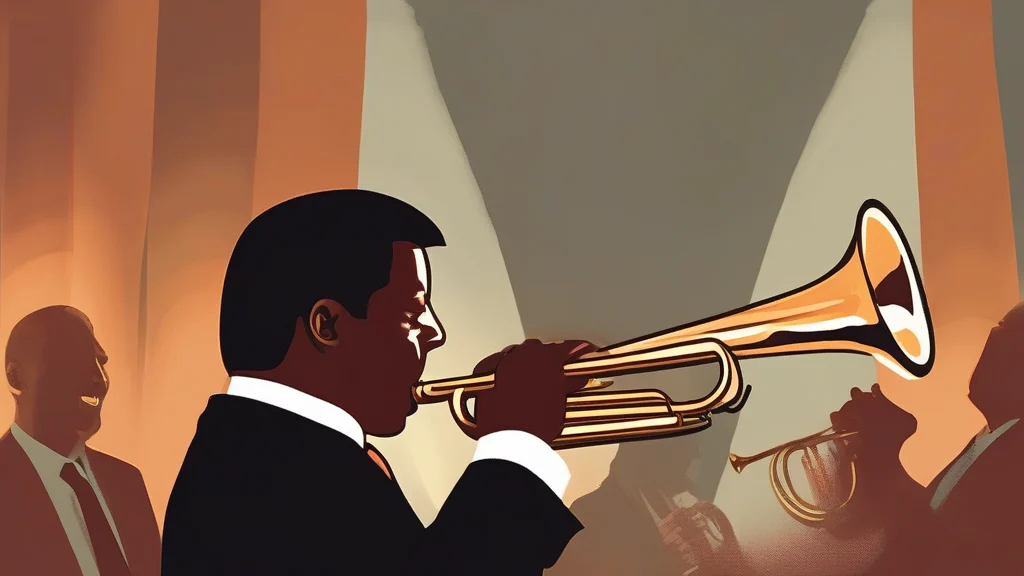
What does trumpeting mean?
Trumpeting is the present participle of trumpet, used both for the physical act of sounding a trumpet and, more often in figurative English, for announcing or promoting something with conspicuous force. In the literal sense, a trumpeting brass band or the trumpeting of a herald describes the powerful carrying sound of the instruments. Figuratively, “trumpeting the news” means making an announcement loudly, while “trumpeting its virtues” means praising or publicizing something so insistently that the praise may sound self-promotional. The figurative use often carries a mildly critical or ironic edge, suggesting that a person or organization is making a great deal of noise about its merits. Trumpeting is common in both British and American English and is especially useful when the loudness or publicity of an announcement is part of the meaning, not merely its content.
To blow or sound a trumpet; figuratively, to proclaim, praise, or promote something loudly and emphatically.
"Supporters gathered in the square, trumpeting demands for reform."
The figurative sense often carries a connotation of insistent publicity or exaggerated praise.
Making or characterized by a loud, resonant sound like that of a trumpet.
"The trumpeting horns announced the procession's arrival."
This participial adjectival use is less common than the verb and is often also figurative.
Before microphones and mass media, a trumpet could announce a ruler's arrival; metaphorically, it still announces something with conspicuous force.
Reviewed by Deb Chak, Editor. AI-assisted content curated by RJS Tech Solutions LLP.
Where does trumpeting come from?
“Trumpeting” is the present-participle form of “trumpet,” following the usual English verb pattern of adding -ing. “Trumpet” entered Middle English from Old French “trompe,” a word associated with the instrument and also with related meanings involving sound or display. “Trump,” “trumpery,” and “trombone” continue forms associated with the same wider Romance and Germanic word family, although the ultimate origin of that family is uncertain.
How trumpeting is actually used
The present-participle form is common in both British and American English. Its figurative use often suggests insistent publicity, excessive praise, or self-promotion, although it can also be used approvingly. The literal sense normally appears in descriptions of musicians, heralds, brass instruments, or ceremonial events.
Easily confused with trumpeting
“Trumpeting” refers to sounding a trumpet or loudly promoting something, whereas “trumping” means outranking or defeating another person or thing.