
What does truncheoned mean?
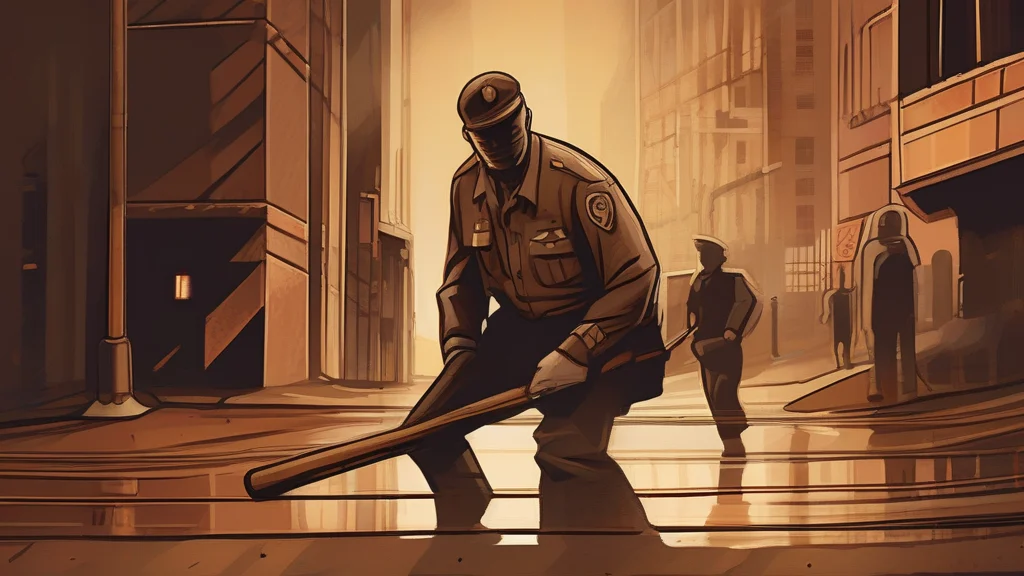
Truncheoned means armed with or carrying a truncheon, the short, heavy club traditionally associated with police officers. It can also function as a verb, meaning beaten or struck with such a club. The adjective is especially evocative in historical and literary descriptions, as in a reference to a truncheoned guard or officer standing at a prison entrance. As a past-tense verb, it appears in accounts of arrests, demonstrations, or other confrontations and carries a strongly negative historical association because of the violence sometimes committed with truncheons. The word is not usually needed in modern neutral descriptions of police equipment, where words such as baton may be more appropriate. Its unusual ending, -oned, makes it sound archaic and dramatic, but the meaning remains transparent: the person either carries the truncheon or has been struck with one.
Armed with or carrying a truncheon.
"A truncheoned officer guarded the entrance to the courthouse."
Chiefly literary, historical, or legal in register.
To beat or strike someone with a truncheon.
"The report claimed that the officer truncheoned the detainee during the struggle."
This use is uncommon in neutral contemporary prose and is mainly found in accounts of violence or official investigations.
Truncheoned preserves the short club in the word itself: it describes someone who has been armed with one—or who has used one.
Reviewed by Deb Chak, Editor. AI-assisted content curated by RJS Tech Solutions LLP.
Where does truncheoned come from?
The word comes from truncheon, a term derived through French from a word meaning a lump or piece and ultimately from Latin truncus, meaning trunk or stem. The suffix -ed forms the adjective and the past tense and past participle of the verb. Related English words, including truncate, truncation, and trunk, reflect the same Latin root.
Related word forms
How truncheoned is actually used
The word is literary, historical, or legal in tone and is much less common in ordinary everyday speech. As an adjective, it is usually used with words such as officer, guard, or policeman; as a verb, it is strongly associated with accounts of violence or institutional force.