
What does tuba mean?
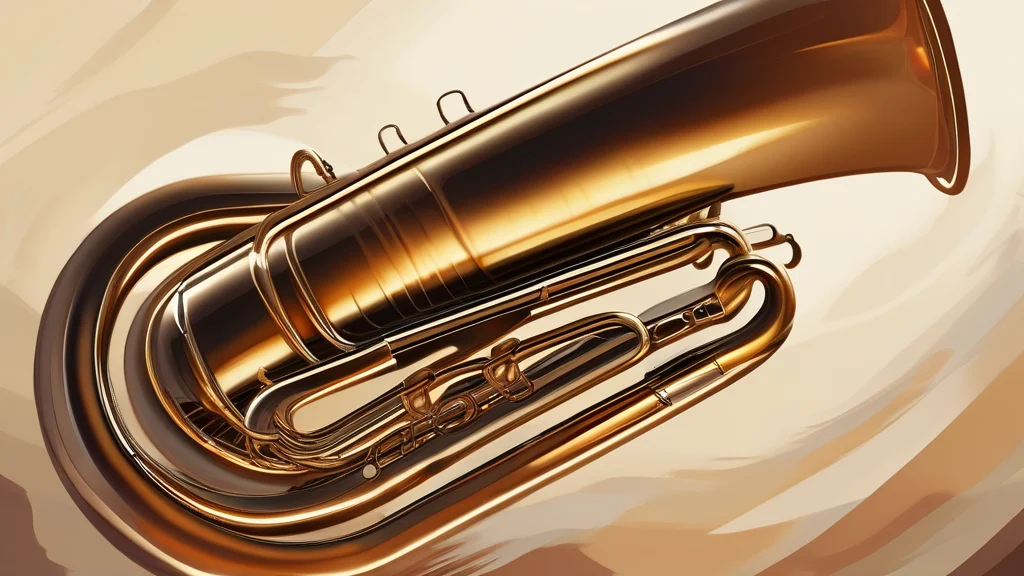
A tuba is a large, low-pitched, valved brass instrument and the bass voice of the orchestra and brass band. A player blows through a cup-shaped mouthpiece and operates valves to route air through the instrument’s long tubing, making different notes available. Its broad, powerful sound supports harmony, underpins ensembles, and can add solemn weight to ceremonial and concert music, although composers also exploit its agile upper register and expressive tone. The word is standard in British and American English. In older writing and historical accounts, tuba could also refer to an ancient or old-style trumpet, reflecting the word’s original Latin meaning. Modern references generally mean the modern orchestral or band instrument unless the context specifies otherwise. The word is useful both as a precise musical term and as an example of how an ordinary historical name can acquire a highly specialized modern meaning.
nounA large, low-pitched, valved brass musical instrument with a broad, deep tone, widely used in orchestras, brass bands, and wind ensembles. The word can also denote an ancient or historical trumpet.
- A large, low-pitched, valved brass musical instrument, especially the bass member of the brass family.
- An ancient or historical trumpet.
"The tuba anchored the ensemble with a warm, resonant bass line."
"Her tuba provided a steady, sonorous foundation beneath the other instruments."
"The museum displayed an illustration of an ancient trumpet described as a tuba."
The standard plural of the musical instrument is tubas.
"Two tubas were placed at the back of the stage."
Its name comes from Latin for “trumpet,” but today the tuba is the deep bass voice of the brass family.
Reviewed by Deb Chak, Editor. AI-assisted content curated by RJS Tech Solutions LLP.
Where does tuba come from?
English borrowed tuba from the Latin tūba, meaning “trumpet.” In the 19th century, the name came to be applied to the modern valved brass instrument, whose deep register distinguishes it from the trumpet associated with the Latin word. Related English forms such as tube and tubule ultimately derive from the related Latin noun tubus.
Related word forms
How tuba is actually used
The word is standard in both British and American English. In modern musical contexts, it normally refers to the large valved brass instrument; the historical sense referring to an ancient trumpet is uncommon outside historical writing.
Easily confused with tuba
A tuba is a musical instrument, whereas a tube is a narrow cylindrical object or passage through which a liquid, gas, or other material may flow.
A tuba is a large, low-pitched brass instrument, while a trumpet is smaller and produces a brighter, higher-pitched sound.