
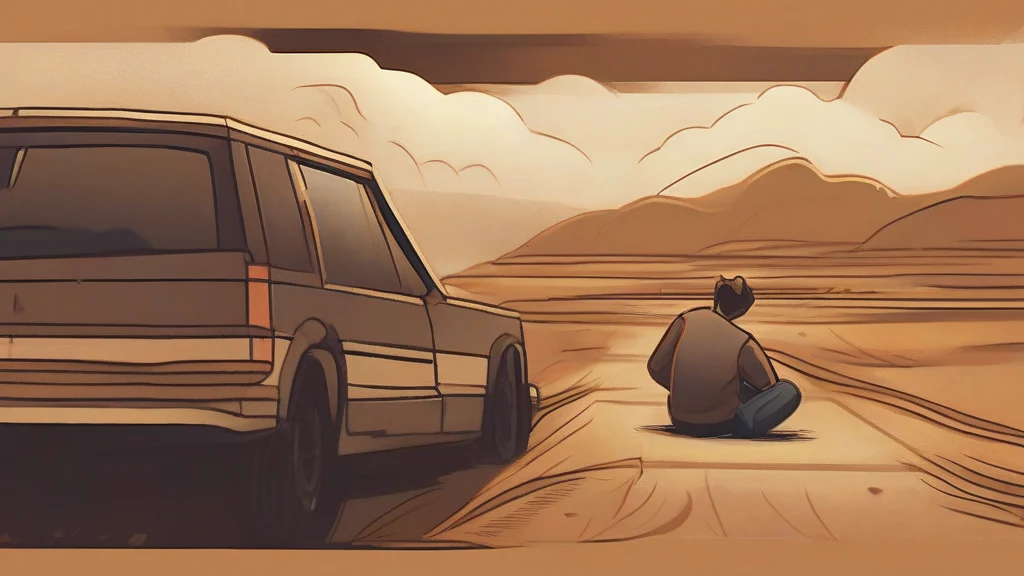
What does tuckered mean?
“Tuckered” is an informal word for being completely exhausted, with the strong sense of having little energy left after prolonged effort, heat, illness, or simply too much activity. It is often used predicatively—“I’m tuckered”—and appears in the emphatic phrase “tuckered out.” The related verbal use, as in “The climb tuckered us,” means that something tires or exhausts a person. Although regional labels differ among dictionaries, the word is understood in both British and American English, although it sounds conversational rather than formal. Its blunt, slightly humorous tone often conveys not only fatigue but also resignation: a speaker may be complaining, joking, or simply admitting defeat. Tuckered is therefore especially useful in dialogue and informal narration when the writer wants to evoke the feeling of being worn out rather than merely tired. It communicates a more dramatic condition than “tired” and usually suggests that normal rest is needed.
Completely exhausted or worn out.
"She was tuckered after caring for the children all day."
Usually informal and often used with “out,” as in “tuckered out.”
To tire or exhaust completely.
"The five-hour journey tuckered everyone in the car."
This verbal use is informal and commonly takes “out,” as in “tuckered me out.”
“Tuckered out” turns exhaustion into a verdict: the energy tank is officially empty.
Reviewed by Deb Chak, Editor. AI-assisted content curated by RJS Tech Solutions LLP.
Where does tuckered come from?
Tuckered is formed from the verb “tucker,” meaning “to tire or exhaust,” with the ending “-ed,” which serves both as a participial adjective ending and as the verb’s past-tense ending. The verb is related to the older word family of “tuck” and “tucking,” although the precise historical route by which it acquired the sense “to tire” is less certain than its modern use. The expression “tuckered out” helped establish the word’s strong association with complete fatigue.
Related word forms
How tuckered is actually used
This is an informal, chiefly conversational word, especially common in North American English but understood in British English as well. It is often used predicatively and occurs frequently with “out.” The word can carry a mildly humorous or complaining tone. American pronunciation commonly retains the final r, while British pronunciation may end in /d/.