
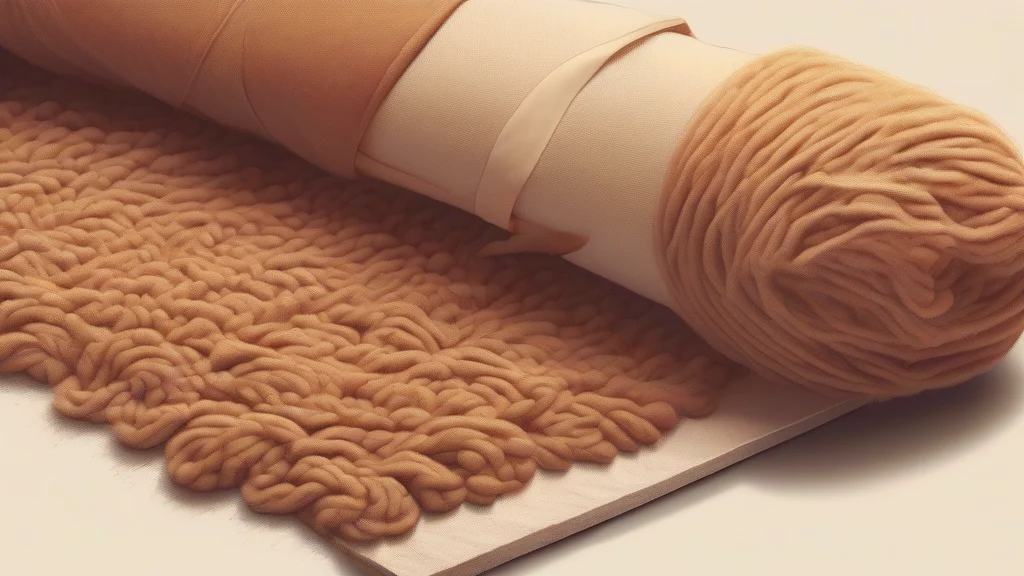
What does tufting mean?
Tufting is the craft of forming or attaching small bundles of fiber known as tufts. In modern textile work, it usually refers to inserting yarn into a backing with a tufting gun or needle, producing a raised, resilient pile; the technique is especially associated with handmade and machine-made rugs. Tufting can also mean decorating an object by fastening tufts to its surface, as on an upholstered cushion, chair, or decorative panel. The word functions both as a noun naming the process or the resulting work and as the present participle of the verb tuft. In everyday use, tufting carries associations of softness, texture, patience, and craftsmanship. Outside textile and craft contexts, however, it may sound specialized. It is also useful as a word-family member: the related adjective tufted can describe fabric, rugs, furniture, or ornamental surfaces.
The process or craft of forming, inserting, or attaching tufts; tufted work made by this process.
"The soft pile of the rug was created through tufting."
Usually uncountable when referring to the technique; the plural tuftings is uncommon and may denote separate pieces of tufted work.
The present participle of tuft, meaning that tufts are being formed, inserted, or attached.
"She was tufting the edge of the cushion with fine wool yarn."
This is a non-finite verb form and is normally used with a grammatical subject in a continuous construction.
Usually uncommon. The plural may refer to multiple pieces of tufted work; the process itself is normally expressed with the uncountable singular form.
"The exhibition displayed small tuftings by several textile artists."
A tufting gun pushes yarn through a backing to create a rug's soft pile—part textile technique, part tiny sculpture.
Reviewed by Deb Chak, Editor. AI-assisted content curated by RJS Tech Solutions LLP.
Where does tufting come from?
The English form tufting was formed from tuft with the present-participle and gerund ending -ing. Tuft was already recorded during the Middle English period, but its ultimate foreign source is uncertain, so it cannot responsibly be traced to a particular language with confidence. For the same reason, no cognate set is listed here.
Related word forms
How tufting is actually used
The word is common in textile, upholstery, rug-making, and crafts contexts. As a present participle, it follows the usual pattern of the verb tuft; as a noun, it is normally used in uncountable senses, although tuftings may refer to individual pieces of tufted work.