
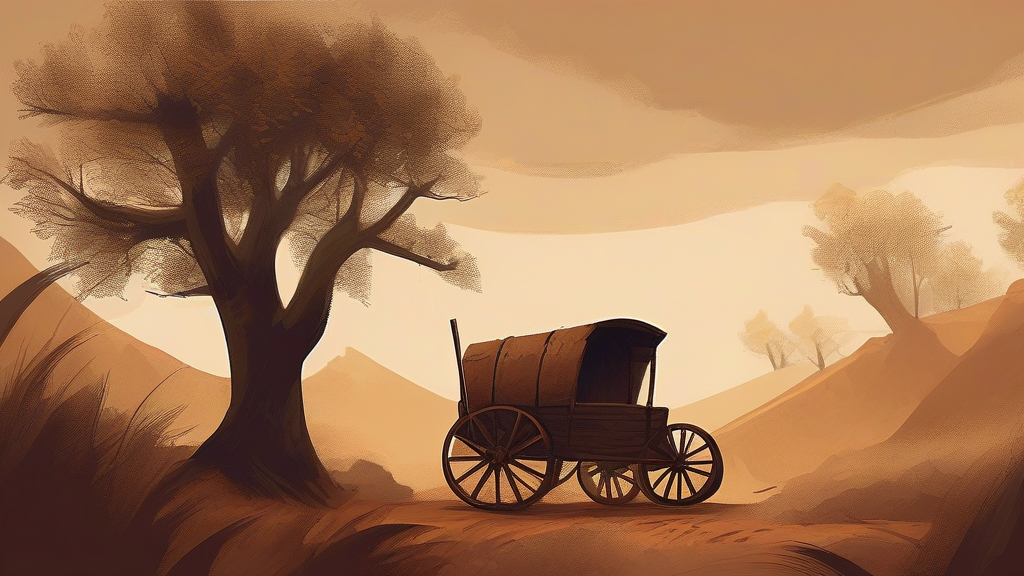
What does tumbril mean?
A tumbril is a light, two-wheeled cart traditionally pulled by a single horse. Its most distinctive feature is the driver's seat, positioned at the front, with a small enclosed or sheltered area behind it for a passenger. Such vehicles were especially useful on narrow, steep, or uneven routes where larger carriages would be impractical, and they became particularly associated with mountainous regions and scenic excursions. Today the word is chiefly British and usually appears in historical, rural, or travel contexts rather than in ordinary discussion of everyday transport. Although it is related to the older word tumbrel, a tumbril is normally understood as the passenger-carrying form of the cart. The term is useful because it names a specific piece of transport history and evokes the practical vehicle design of upland communities and nineteenth-century travel.
nounA light, usually single-horse, two-wheeled cart with a seat for the driver at the front, traditionally used to carry one passenger in mountainous or rough terrain.
- A light two-wheeled cart, traditionally drawn by one horse, with a seat at the front for the driver and space for a passenger; used especially in mountainous regions.
"They took a tumbril along the steep mountain path."
"The guide waited beside the tumbril while the visitors dismounted."
"An old photograph shows a tumbril carrying supplies across a high mountain pass."
The standard plural adds -s to the singular form.
"Several old tumbrils remain in use at the heritage railway."
It was the mountain cart: a one-horse vehicle with a perching driver's seat, built for rough passes rather than crowded city streets.
Reviewed by Deb Chak, Editor. AI-assisted content curated by RJS Tech Solutions LLP.
Etymology of tumbril
The English word was borrowed from French tombereau, meaning a small cart, with influence from the closely related English form tumbrel. The French word is generally traced to Middle Dutch tombere, an old term for a cart. The deeper ancestry of that Dutch form is uncertain, so its further derivation should not be stated more precisely.
How tumbril is actually used
The word is chiefly British and has a traditional or historical tone. It is still encountered in descriptions of mountain travel, rural transport, and preserved transport traditions.
Easily confused with tumbril
A tumbril typically has a passenger seat and a body for the rider, whereas a tumbrel traditionally consists chiefly of a flat platform between two wheels for hauling loads.